


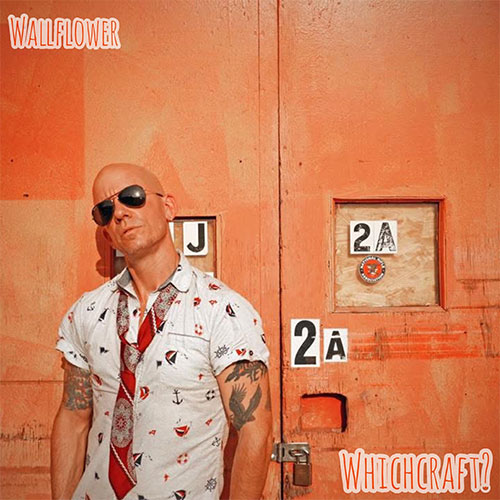
Whichcraft Turns Quiet Observation Into Pressure on Drill Kid-Produced “Wallflower”
Some records announce themselves by kicking in the door. Whichcraft’s “Wallflower” is more interested in what can be learned by standing near the edge of the room and watching everything unfold.
Produced by Drill Kid, the new single turns distance into a position of strength. Its title suggests someone overlooked, withdrawn, or content to remain outside the center of attention, but Whichcraft does not treat that posture as weakness. The perspective feels deliberate: the person saying the least may be absorbing the most, measuring the room before deciding how much of himself it deserves.
Drill Kid gives that idea a focused setting. The production leaves enough room for Whichcraft’s presence to carry the record while maintaining the tension needed to keep the song from drifting into simple reflection. There is a useful contrast at work between restraint and pressure. Rather than crowding the performance with unnecessary changes, the beat holds its shape and allows the mood to deepen over the song’s compact 2:36 runtime.
Listen to Spit Fire Radio: www.spitfireradio.com
That economy matters. “Wallflower” does not overstay its welcome or dilute its central feeling. Whichcraft keeps the record moving with the discipline of an artist who understands that introspection does not have to mean inactivity. There is still forward motion here, but it comes from observation, internal calculation, and the sense that remaining outside the crowd can sharpen a person’s vision of it.

The cover art extends that idea before the music even begins. Whichcraft is cropped at the far left of the frame, while an orange wall occupies most of the image. His partial presence creates its own visual argument: he is in the picture without surrendering himself completely to it. Even the “2A” marker on the wall contributes to the feeling of a location captured in passing—specific enough to feel real, but unexplained enough to preserve mystery.
That restraint also separates the track from music that mistakes constant activity for impact. Whichcraft does not need to make the record feel oversized. The appeal is in the control, the way the performance and Drill Kid’s production stay committed to one emotional climate. Each element works toward the same impression: solitude can be protective, awareness can be power, and the person outside the circle may have the clearest view of what is happening inside it.
Publicly indexed information about Whichcraft remains limited, which makes the record itself the most useful introduction. Drill Kid’s visible catalog, meanwhile, presents him as a hands-on creative who has credited himself with writing, performing, producing, and engineering his own material. That independent, self-contained approach makes his pairing with Whichcraft feel natural. “Wallflower” sounds like the work of two artists comfortable building atmosphere without unnecessary explanation.
For Whichcraft, the single is an effective statement because it gives listeners a defined point of view rather than a generic introduction. “Wallflower” is not about begging to be noticed. It is about recognizing that the edge of the room can be its own vantage point—and making sure the music carries enough weight to pull attention there anyway.