

If This Is Music History… Something’s Missing
There’s a version of music history told through institutions, and then there’s the version lived through speakers, streets, stages, and culture. Most of the time, those two versions eventually align. But when it comes to Hip-Hop and the Rock & Roll Hall of Fame, the gap between them is still impossible to ignore.
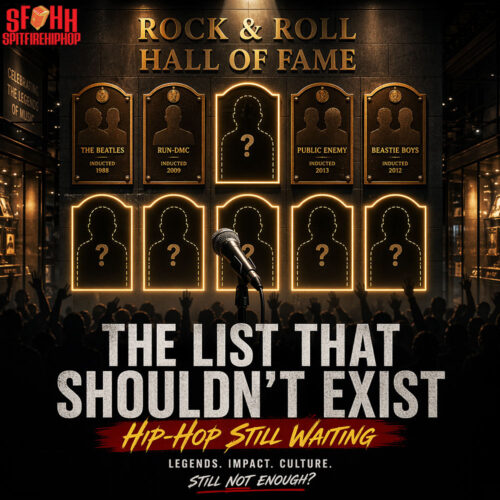
Because if the Hall is meant to represent the most impactful artists in music, then there’s one question that keeps coming up: how are so many foundational figures still missing?
This isn’t a fringe conversation anymore. Hip-Hop has long surpassed every other genre in global influence, shaping everything from fashion to language to business. And yet, when it comes to institutional recognition, it continues to move at a slower pace—almost as if the culture still has to prove something that’s already been established.
That’s how a list like this exists in 2026.
These Aren’t Just Artists — They’re Cornerstones
The names that continue to be left out aren’t borderline cases or debatable additions. They’re artists whose impact is woven into the foundation of Hip-Hop itself. Their absence doesn’t just raise eyebrows—it raises questions about how influence is being measured.
- Nas — A lyricist whose debut redefined storytelling and technical precision in rap
- Snoop Dogg — A global icon who helped carry West Coast Hip-Hop into mainstream dominance
- Dr. Dre — The architect behind multiple eras of sound, from N.W.A. to modern production
- Ice Cube — A voice of social commentary who bridged music, film, and cultural influence
- Busta Rhymes — One of the most dynamic performers Hip-Hop has ever seen
- KRS-One — A foundational figure in Hip-Hop philosophy and education
- Lil Wayne — A generation-defining artist who reshaped modern rap’s sound and structure
- Scarface — A storyteller whose influence runs deep across Southern Hip-Hop
- De La Soul — Innovators who expanded what Hip-Hop could sound like and represent
- Slick Rick — One of the most influential narrative voices in rap history
This list isn’t about personal preference. It’s about structural impact. These are artists whose work didn’t just succeed—it redirected the genre.
What the Hall Rewards — And What It Misses
To understand why this list exists, you have to look at how the Rock Hall has historically defined recognition. There’s often a preference for clear narratives—artists with easily digestible careers, centralized catalogs, and traditional industry pathways.
Hip-Hop doesn’t always operate that way.
Listen to Spit Fire Radio: www.spitfireradio.com
Its innovation often comes from disruption, from bending structure rather than following it. Artists move between roles, redefine sound mid-career, and build influence in ways that don’t always fit neatly into institutional categories. That complexity can slow down recognition, even when the impact is undeniable.
And that’s where the disconnect begins.
There’s always been a delay between innovation and recognition. That’s not unique to Hip-Hop. But the gap feels wider here because of how fast the culture evolves. By the time institutions catch up to one era, Hip-Hop has already moved into another.
The result is a backlog of influence.
Artists who defined entire decades are still waiting, while newer conversations begin to form around the next wave. It creates a cycle where recognition is always slightly behind the moment it’s meant to honor. And for a culture built on immediacy and relevance, that delay stands out even more.
The SpitFire Take
This list shouldn’t exist.
Not because every artist needs validation, but because the purpose of the Rock & Roll Hall of Fame is to document music history as accurately as possible. When foundational Hip-Hop figures are missing, that history becomes incomplete.
The culture already knows who these artists are. It understands their impact, their influence, and their place in the timeline.
The question now is whether the institution will fully reflect that truth—or continue to trail behind it.