


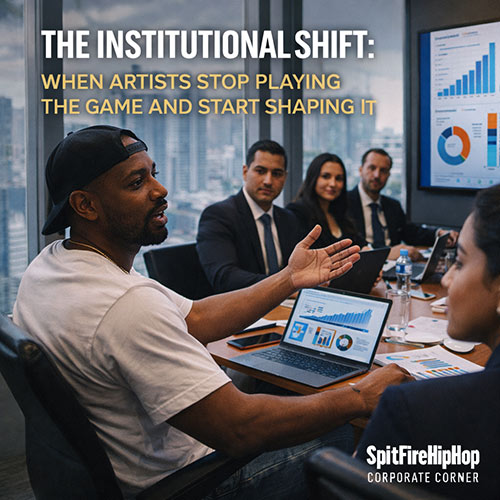
For decades, artists were taught how to win inside the music industry. Very few were taught how to influence it. The institutional shift is the moment artists move from reacting to systems to shaping them — from participants to power holders.
What the Institutional Shift Actually Is
The institutional shift occurs when an artist’s role changes from talent to stakeholder. At this level, artists don’t just release music or sign deals, they influence platforms, shape policy, direct capital, and impact how the industry functions.
This shift is not about fame. It’s about position.
Institutions respond to ownership, data, and scale — not applause.
Why Most Artists Never Reach This Level
Most artists spend their careers optimizing for visibility instead of influence. They chase audience size without controlling the systems that serve that audience.
Artists stall below the institutional level because:
- they don’t own scalable assets
- they lack consolidated data
- they don’t control distribution paths
- they operate project-to-project
- they never convert momentum into equity
Institutions don’t listen to creators — they listen to owners.
How Power Actually Works in Music
Power in the music industry doesn’t live in charts or headlines. It lives in boardrooms, equity structures, and data ownership.
Institutional power comes from:
- ownership stakes
- recurring revenue
- catalog control
- audience data
- operational infrastructure
Artists who control these elements influence outcomes without asking permission.
Listen to Live Hip-Hop Music on Spit Fire Radio https://www.myksfr.com
Why Platforms Court Artists at This Level
Platforms don’t fear viral artists. They fear artists who can move audiences independently.
Artists with institutional leverage:
- influence platform adoption
- negotiate preferred access
- shape monetization models
- secure advisory roles
- receive equity participation
At this level, artists aren’t marketed to — they’re consulted.
The Transition from Artist to Operator
The institutional shift requires artists to think beyond self-expression.
They begin asking:
- How does this scale?
- Who owns this data?
- What leverage does this create?
- What decisions does this influence?
The artist becomes an operator. Creativity remains, but it’s supported by structure.
Why Catalogs Become Political
Once catalogs reach meaningful scale, they influence licensing standards, pricing norms, and platform behavior. This is why institutional buyers pursue catalogs aggressively.
Catalogs aren’t just revenue streams — they’re voting power.
Artists who understand this protect catalogs differently.
How Artists Step Into Institutional Roles
Artists don’t need permission to influence institutions — but they need preparation.
They enter this tier by:
- consolidating assets
- formalizing operations
- professionalizing governance
- pursuing equity partnerships
- accepting advisory positions
- participating in ownership discussions
Influence follows structure.
Why Legacy Artists Dominate Institutional Space
Veteran artists often hold institutional power not because of fame, but because of asset accumulation over time. Their catalogs, companies, and audiences create leverage younger artists often underestimate.
Time + ownership = authority.
The Corporate Corner Reality
Institutions shape industries. Artists who want lasting influence must become part of them — not as talent, but as stakeholders.
This isn’t selling out.
This is growing up.
The Real Takeaway
The highest level of success isn’t visibility.
It’s influence.
Artists who reach the institutional shift don’t ask how the industry works — they help decide how it evolves.
That’s the final move.