

There was a time when success in Hip-Hop could be measured by a relatively straightforward formula. Record the right song, earn radio rotation, sell albums, and tour as long as the audience demanded it. While that blueprint created some of the most recognizable names in music history, the business surrounding Hip-Hop has undergone a profound transformation. Today, a song is no longer the finish line. It is the starting point of something much larger. The artists building the most sustainable careers are not simply creating music; they are developing intellectual property that can fuel multiple businesses, reach audiences in different ways, and generate value for years after the initial release.
This shift has quietly become one of the defining characteristics of the modern music industry. Streaming services have made it possible for virtually anyone to release music worldwide, but accessibility has also created unprecedented competition. Thousands of songs arrive on digital platforms every day, making it increasingly difficult for any single release to maintain attention for long. In response, the most forward-thinking artists have begun looking beyond first-week streams and playlist placements. They are asking a more important question: What can this music become? That question separates creators who produce content from entrepreneurs who build companies.
The concept of intellectual property, often shortened to IP, has long been the foundation of the world’s largest entertainment businesses. Companies do not become global brands because of a single product. They succeed because they transform creative ideas into ecosystems that continue generating value through multiple channels. Hip-Hop has now entered a period where independent artists have access to many of the same opportunities. Technology has reduced barriers that once required major-label infrastructure, giving creators unprecedented control over how their work is owned, distributed, and expanded.
Listen to Spit Fire Radio: www.spitfireradio.com
Thinking like a media company begins with changing the way artists define their product. The music itself remains the emotional centerpiece of everything they create, but it should no longer be viewed as the only product they have to offer. Every song carries a story, every album has a visual identity, and every artist possesses a personality that audiences connect with beyond the music itself. Those elements are valuable assets that can continue working long after the streaming numbers level off.
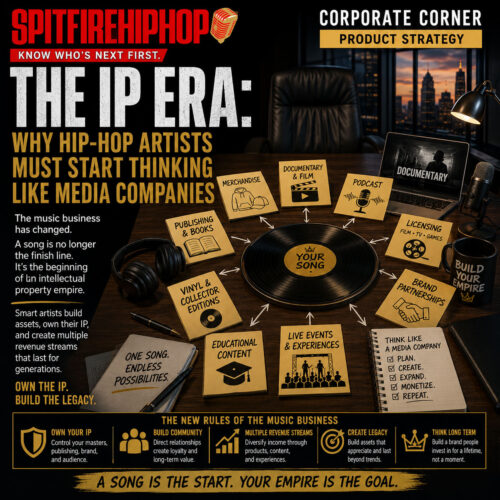
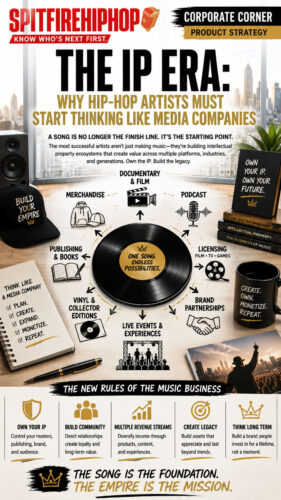
One successful release can become the foundation for an entire portfolio of opportunities. Instead of viewing a record as a temporary promotional campaign, artists should begin seeing it as intellectual property capable of expanding into multiple business ventures, including:
- Merchandise and apparel collections
- Documentary or behind-the-scenes video content
- Podcast series
- Vinyl and collector editions
- Licensing for film, television, and gaming
- Educational content or masterclasses
- Live experiences and exclusive fan events
- Brand collaborations and partnerships
None of these opportunities replace the importance of making exceptional music. Instead, they multiply its value. A great song can introduce an audience, but intellectual property creates reasons for that audience to remain connected long after the first listen.
Hip-Hop has always rewarded entrepreneurial thinking, even before the industry used terms like “creator economy” or “brand ecosystem.” The culture has consistently expanded beyond music into fashion, publishing, beverages, technology, sports, and countless other industries. Many of Hip-Hop’s most influential figures became icons not simply because they released great records, but because they understood that their names, stories, and creative visions possessed value far beyond the recording studio. They built recognizable brands that could thrive regardless of changing trends in music consumption.
Independent artists now possess advantages that previous generations could only imagine. Affordable recording technology, global digital distribution, direct-to-consumer merchandise platforms, subscription communities, and social media have dramatically lowered the cost of building a business. What once required an entire corporate infrastructure can now be managed by a focused independent team. The opportunity has shifted from gaining access to the marketplace to learning how to maximize the assets already being created.
This change requires artists to rethink the planning process behind every release. Too often, discussions begin and end with release dates, cover art, and promotional posts. Those details remain important, but they represent only the surface level of a much larger strategy. Before music is released, artists should spend equal time asking how that project can continue creating value over the next three, five, or even ten years. That perspective transforms music from a campaign into a long-term investment.
Imagine releasing an album accompanied by a visual documentary that captures its creation, a limited clothing collection inspired by its artwork, exclusive behind-the-scenes interviews available only to subscribers, and live listening experiences designed specifically for dedicated supporters. None of these ideas require stadium-sized budgets. They require intentional planning and a willingness to see music as intellectual property rather than disposable content. The goal is not to overwhelm audiences with products but to create meaningful experiences that deepen their connection to the artist.
One of the most valuable lessons artists can learn comes from companies outside the music industry. The world’s leading entertainment brands rarely depend on a single revenue stream. A successful character may appear in films, television, books, games, merchandise, live attractions, and digital experiences. Each extension strengthens the overall brand while creating additional opportunities for audiences to engage. Independent Hip-Hop artists can apply the same philosophy on a scale appropriate to their resources. Every interview, music video, visual identity, and live performance should reinforce the larger story the artist wants people to remember.
Another area where many artists leave significant value on the table is their catalog. New releases naturally receive the most attention, yet older music often contains untapped potential. A strong catalog should not gather digital dust while creators focus exclusively on the next single. Instead, it should continuously introduce new listeners, inspire fresh content, and create new revenue opportunities. Anniversary editions, deluxe releases, lyric breakdowns, sample discussions, vinyl pressings, remastered versions, and documentary reflections can all breathe new life into existing work. Intellectual property becomes more valuable when it continues evolving instead of remaining static.
The rapid pace of digital culture often encourages artists to chase viral moments. While short-term visibility can certainly create opportunities, sustainable careers are rarely built on fleeting attention alone. Platforms change their algorithms. New social media apps emerge while others disappear. Consumer habits shift constantly. Intellectual property, however, remains valuable regardless of which platform dominates next year. Ownership provides stability in an environment where distribution methods continually evolve.
For that reason, every independent artist should carefully evaluate which assets remain under their control. Long-term leverage often comes from owning the elements that define an artist’s identity rather than relying exclusively on third-party platforms to maintain audience relationships. Among the most valuable assets to prioritize are:
- Master recordings
- Publishing rights
- Brand identity and trademarks
- Direct relationships with fans through email and owned platforms
- Original visual content and creative archives
Each of these assets increases an artist’s flexibility while reducing dependence on constantly changing digital ecosystems.
The conversation surrounding ownership has traditionally focused on owning masters, and for good reason. Master ownership remains critically important. However, stopping the conversation there misses the larger opportunity unfolding across the entertainment industry. Ownership is no longer limited to recordings. It includes the stories surrounding those recordings, the communities built around them, the visual identity associated with them, and the experiences that extend beyond them. The artists who recognize this broader definition of intellectual property position themselves to build businesses rather than simply careers.
This evolution represents the next chapter in Hip-Hop‘s entrepreneurial legacy. The culture has never been afraid to innovate, challenge conventions, or redefine success on its own terms. Today’s independent creators possess more control over their futures than any generation before them, but that control only becomes meaningful when paired with strategic thinking. Recording great music will always remain the foundation, yet foundations are meant to support something larger. Without building upon them, much of their potential remains unrealized.
The music business has quietly entered what can best be described as the Intellectual Property Era. Success is increasingly determined not only by who creates compelling records but by who develops the strongest ecosystem around those records. The artists who embrace this mindset will spend less time chasing the next viral trend and more time creating assets that appreciate in value year after year.
In the years ahead, audiences may remember individual songs, but industries will remember the creators who transformed those songs into enduring brands. The future of Hip-Hop belongs not only to the best musicians but to the best builders—artists who understand that every release is more than music. It is the foundation of a media company waiting to be created.