

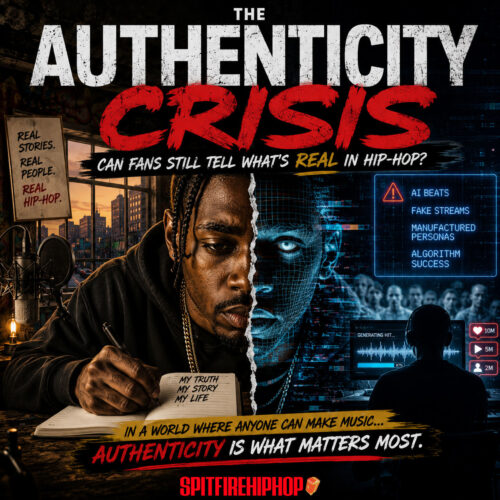
Hip-Hop was built on truth, identity, and lived experience. But in 2026, the culture is facing a new challenge. As AI-generated content, algorithmic promotion, and manufactured personas flood digital platforms, fans are beginning to question what authenticity really means.
Hip-Hop Was Built on Realness
From its earliest days, Hip-Hop rewarded honesty. Artists earned respect by telling stories rooted in real experiences, neighborhoods, and emotions. Whether it was struggle, ambition, pain, or celebration, authenticity became one of the genre’s most important currencies.
Fans didn’t just listen to artists—they believed them. That emotional connection is what separated Hip-Hop from manufactured pop formulas. Listeners weren’t searching for perfection. They were searching for identity, perspective, and truth.
But today, the environment surrounding music has changed dramatically.
The Rise of Artificial Everything
Modern platforms reward speed, consistency, and visibility. As competition for attention intensified, artists and labels began optimizing content for algorithms instead of emotional connection. At the same time, AI tools entered the creative process.
Now artists can:
- generate beats in minutes
- clone vocal styles
- write lyrics with AI assistance
- create synthetic visuals and marketing content
This technological shift has blurred the line between creativity and automation. For many fans, the result feels unsettling. The more polished and optimized content becomes, the harder it is to determine what is genuinely human.
Why Fans Are Becoming More Skeptical
Audiences today are more aware of how the industry operates than ever before.
Fans understand:
- streaming manipulation exists
- viral moments can be manufactured
- artist personas are often curated strategically
As a result, listeners have become highly sensitive to anything that feels artificial.
This is why comment sections are filled with phrases like:
- “This feels fake.”
- “Industry plant energy.”
- “Made for TikTok.”
Fans are no longer consuming music passively. They are actively evaluating whether an artist feels authentic.
Listen to Spit Fire Radio: www.spitfireradio.com
The Algorithm Changed the Incentives
The authenticity crisis is not caused by AI alone. It is also a product of platform behavior.
Algorithms reward:
- consistency
- engagement
- replayability
- fast content cycles
That pressure encourages artists to prioritize visibility over vulnerability. Songs become shorter. Hooks become more immediate. Content becomes optimized for retention instead of expression. Over time, this creates a culture where artists feel pressured to perform authenticity instead of living it.
Why Authenticity Still Wins Long-Term
Despite all the changes, one thing remains true: fans still respond most deeply to artists who feel real.
Authenticity creates:
- stronger fan loyalty
- emotional connection
- cultural longevity
That is why some artists continue building dedicated audiences even without massive algorithmic support. Their music feels personal, honest, and human. Listeners may engage with artificial content briefly, but they stay connected to artists who feel genuine.
The Difference Between Strategy and Manipulation
Modern artists still need strategy. Marketing, rollout planning, and content creation are part of the business now. The problem begins when strategy completely replaces identity.
There is a difference between:
- presenting yourself effectively
and - manufacturing an entirely artificial persona
Fans can often sense the difference. The artists who thrive in the future will likely be the ones who balance modern strategy with authentic expression.
The Corporate Corner Perspective
The authenticity crisis reveals a larger shift happening inside the music industry.
Technology has made it easier than ever to create and distribute content. But because everyone now has access to the same tools, authenticity itself becomes more valuable. When everything can be replicated, what stands out is humanity.
This creates a competitive advantage for artists willing to:
- show imperfection
- share real experiences
- build direct fan relationships
- maintain a clear identity
In an artificial environment, realness becomes premium.
The Bigger Question Facing Hip-Hop
Hip-Hop now faces an important cultural question:
Can the genre maintain its emotional core while adapting to a digital, algorithm-driven world? The answer will likely define the next era of the culture. Artists who treat authenticity as an asset—not just an image—will shape what Hip-Hop becomes moving forward.
Conclusion: Why Real Still Matters
Technology will continue evolving. Algorithms will continue influencing visibility. AI tools will become more advanced.
But the foundation of Hip-Hop has never been technology. It has always been connection.
Fans may not always know how content is made. But they can still feel when something is real. And in the long run, that feeling still matters most.