


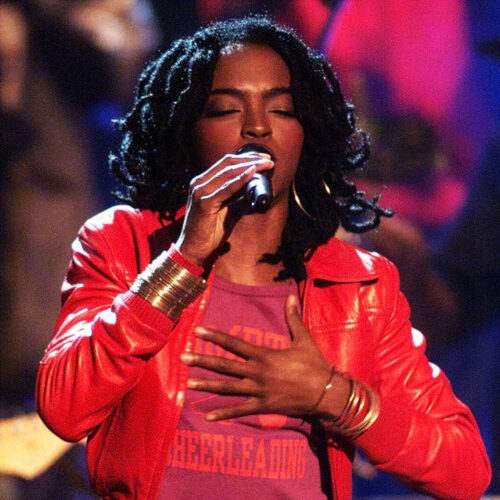
There are artists who build careers, and then there are artists who alter the direction of music itself. Lauryn Hill belongs firmly in the latter category. Her presence in the culture has never been defined by volume, but by weight—the kind of artistic weight that shifts expectations, raises standards, and leaves a permanent imprint on everything that follows.
And yet, despite that level of impact, Lauryn Hill remains absent from the Rock & Roll Hall of Fame. In a genre where recognition is often delayed, her omission feels less like a timing issue and more like a misunderstanding of what influence actually looks like. Because if the Hall exists to honor artists who changed music, her absence becomes harder to explain with each passing year.
When The Miseducation of Lauryn Hill arrived, it didn’t feel like a debut—it felt like a culmination of everything Hip-Hop, soul, and R&B could become when placed in the hands of a singular voice. The album carried an emotional honesty that cut through the polished surface of the industry at the time, replacing formula with feeling and performance with perspective.
Commercial success followed, but that was never the most important part of the story. Yes, it debuted at number one. Yes, it sold millions. Yes, it earned five Grammy Awards in one night. But more importantly, it reshaped the expectations placed on artists—especially women—within Hip-Hop. It proved that vulnerability could coexist with lyrical precision and that depth could be just as powerful as dominance.
That shift didn’t fade. It became foundational.
If you listen closely to today’s music, you can still hear Lauryn Hill in it. Not in imitation, but in structure. The blending of rap and melody that now feels standard once stood as a bold creative decision. The willingness to explore identity, love, faith, and self-worth in a single body of work wasn’t always embraced the way it is now.
Listen to Spit Fire Radio: www.spitfireradio.com
Modern artists often move freely between genres, pulling from multiple influences without being boxed into one category. That freedom didn’t appear out of nowhere. It was earned, shaped, and normalized by artists like Lauryn Hill, who refused to separate emotion from technique or artistry from authenticity.
Her influence is not loud—it’s embedded.
The reasons often given for her absence from the Rock Hall tend to circle around the same talking points. Some point to the size of her catalog. Others reference her limited commercial output over time or her distance from the traditional industry cycle. On the surface, those arguments may sound reasonable, but they fall apart when placed against the Hall’s own purpose.
The Rock & Roll Hall of Fame was never meant to reward consistency alone. It was built to honor artists whose contributions altered the course of music. By that definition, Lauryn Hill’s case is not borderline—it’s clear.
- A single album that redefined genre boundaries
- A voice that reshaped expectations for women in Hip-Hop
- An influence that continues to echo across generations
When the conversation shifts from output to impact, the argument against her inclusion loses its footing.
Lauryn Hill’s situation doesn’t exist in isolation. It reflects a broader pattern in how Hip-Hop has been acknowledged by institutions that were not originally built with the culture in mind. Even as Hip-Hop has grown into the most influential genre in the world, its pioneers and innovators have often had to wait longer for recognition than their impact would suggest.
This delay creates a gap between what the culture knows and what institutions validate. Fans, artists, and historians already understand Lauryn Hill’s place in music history. The question is whether the Rock Hall is prepared to fully reflect that understanding—or continue to trail behind it.
The SpitFire Take
Lauryn Hill doesn’t need the Rock & Roll Hall of Fame to confirm her legacy. That legacy has already been written, studied, and felt across decades of music. But the Hall does have a responsibility—to tell the story of music accurately, completely, and without hesitation.
Right now, that story is missing a chapter. And until Lauryn Hill is included, it will remain incomplete.