




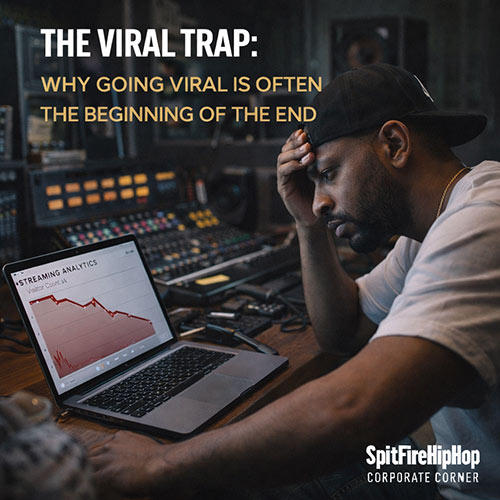
Every artist wants to go viral. But most don’t realize what comes after. In today’s Hip-Hop economy, virality doesn’t build careers — it exposes weaknesses. Without structure, a viral moment becomes the fastest way to disappear.
Why Virality Feels Like Success
Virality creates immediate validation. Numbers spike. Notifications flood in. Industry attention appears overnight. To an artist who’s been grinding, it feels like arrival.
But virality is not success — it’s stress testing.
The moment a song goes viral, platforms and fans begin evaluating what happens next. Most artists fail that test not because the music is bad, but because the system behind it isn’t ready.
What Platforms Actually Measure After a Viral Moment
Algorithms don’t reward excitement. They reward behavior.
Once a song spikes, platforms quietly track:
- skip rate after first listen
- save rate relative to views
- repeat listens over time
- catalog exploration
- session length
If those signals drop, the system pulls back — fast.
Virality opens the door. Retention decides whether you stay inside.
Why Most Viral Songs Collapse in Weeks
Viral songs often peak without infrastructure. Artists experience attention before trust, visibility before loyalty, and reach before readiness.
Common collapse patterns:
- fans don’t save the song
- listeners don’t explore older music
- no follow-up release is ready
- identity isn’t clear
- the moment isn’t sustained
When the spike fades, nothing replaces it.
The Dangerous Myth: “I’ll Figure It Out After It Hits”
Many artists assume they’ll solve problems after virality. In reality, virality accelerates consequences.
When artists aren’t prepared:
- labels hesitate
- playlists don’t expand
- fans move on
- momentum turns into pressure
The industry doesn’t invest in potential — it invests in proof.
Why Virality Without a Catalog Is a Dead End
Catalog depth determines whether virality compounds or collapses. When a new listener finishes the viral song and finds nothing else to connect with, the session ends.
Strong catalogs:
- absorb attention
- extend discovery
- stabilize streams
- convert fans
Weak catalogs waste momentum.
How Artists Get Trapped Chasing the Moment
After a viral hit, artists often chase the same formula. They recreate the sound, the visuals, the tempo — hoping to spark another spike.
This traps artists in:
- trend dependency
- creative exhaustion
- shrinking trust
- inconsistent identity
Fans don’t fall in love with moments. They fall in love with artists.
Why Labels Don’t Chase Viral Artists Anymore
Labels have learned the cost of virality without structure. Today, they wait to see what happens after the moment.
They look for:
- stable monthly listeners
- growing save rates
- catalog engagement
- community movement
- consistent output
Viral noise alone doesn’t justify risk.
How Artists Escape the Viral Trap
Virality doesn’t have to be fatal. Artists who survive it treat it as a signal, not a strategy.
They:
- prepare follow-up releases early
- guide fans into the catalog
- reinforce identity immediately
- prioritize saves over views
- slow decisions instead of rushing
Momentum must be managed, not chased.
Why Slow Growth Beats Explosive Growth
Slow growth creates habits. Explosive growth creates attention.
Artists who grow steadily:
- build retention
- gain algorithmic trust
- improve leverage
- reduce burnout
Longevity beats headlines.
The Corporate Corner Reality
Companies don’t scale off spikes they scale off systems. Artists who rely on virality without infrastructure aren’t scaling. They’re gambling.




Pingback: Why Some Hip-Hop Artists Are Literally Quitting TikTok — And What It Means – SpitFireHipHop.com
Pingback: The Algorithm Fatigue Era: Why Hip-Hop Artists Are Rebuilding Direct Fan Power – SpitFireHipHop.com
Pingback: Why Fans Are Rejecting Trend-Chasing Music in 2026 – SpitFireHipHop.com