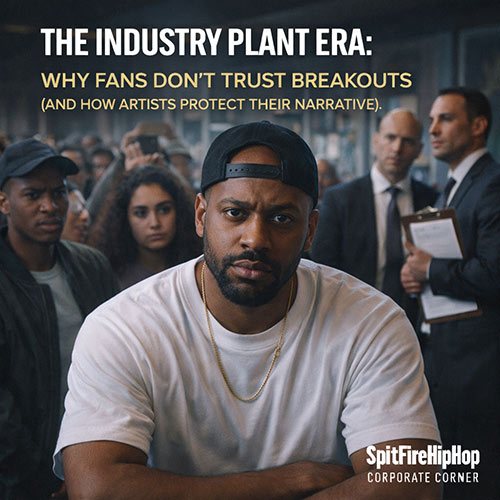
Breakout success used to be celebrated. Today, it’s questioned. When an artist rises quickly, fans don’t ask how good the music is—they ask who’s behind it. Welcome to the industry plant era, where credibility is fragile, and narratives matter more than ever.
Why “Industry Plant” Became a Cultural Trigger
The term “industry plant” didn’t come from labels—it came from fans. It reflects a growing distrust of platforms, press cycles, and sudden visibility. Listeners have learned how algorithms, marketing budgets, and editorial placement can manufacture momentum, so when an artist breaks fast, suspicion follows.
This isn’t cynicism. It’s pattern recognition.
Fans have watched:
- artists appear everywhere overnight
- press coverage arrive before organic buzz
- playlists push unfamiliar names aggressively
In response, fans now interrogate the story behind success, not just the sound.
Why Breakouts Feel Artificial in 2025
Modern breakouts don’t look like grassroots growth. They look like coordination. When visibility spikes without visible community buildup, fans assume manipulation.
What triggers skepticism:
- sudden major playlist placement
- heavy press before audience connection
- polished branding without visible grind
- label affiliations revealed late
- social metrics that don’t match engagement
Perception doesn’t have to be accurate to be powerful.
Why Fans Care More About Narrative Than Ever
Hip-Hop culture values authenticity—not just musically, but structurally. Fans want to believe they discovered the artist, not that the artist was delivered to them.
When fans feel excluded from the discovery process, trust erodes.
Narrative answers questions fans care about:
- Where did this artist come from?
- Who supported them early?
- What did they build before the spotlight?
- What risks did they take?
Without answers, speculation fills the gap.
Why Algorithms Made Trust Harder
Platforms reward velocity, not transparency. Algorithms don’t explain why something is trending—they just amplify it. This creates a credibility problem.
Artists can win algorithmically and lose culturally at the same time.
When fans see:
- low-comment engagement with high views
- trending songs without visible fan excitement
- viral moments disconnected from identity
they question legitimacy—even if the music is strong.
The Difference Between Backed and Manufactured
Being supported is not the same as being manufactured. But fans struggle to tell the difference.
Artists are backed when:
- support amplifies existing demand
- communities already exist
- growth looks layered, not instant
Artists feel manufactured when:
- exposure precedes engagement
- naWhy Over-Explaining Backfires
- Trying to “prove” authenticity often makes things worse. Defensive explanations feel rehearsed. Fans don’t want justification—they want continuity.
- Artists who remain consistent before and after success feel believable. Artists who suddenly reframe their story invite scrutiny.
- Narrative protection isn’t a statement—it’s a track record.
- rrative is vague or defensive
- discovery feels imposed
The difference lies in documentation, not denial.
How Artists Protect Their Narrative
Artists don’t control fan discourse—but they can shape context.
Artists protect narrative by:
- showing progression publicly
- acknowledging early supporters
- sharing behind-the-scenes moments
- documenting growth over time
- being transparent about partnerships
Silence invites speculation. Context builds trust.
Why Indie Artists Have an Advantage
Independent artists often look more authentic because their growth is visible. Fans see the steps, the setbacks, and the learning curve.
This visibility becomes a credibility shield.
Indie artists who document the journey:
- reduce skepticism
- increase loyalty
- deepen fan investment
Fans defend artists they feel they helped discover.
Why This Era Isn’t Going Away
The industry plant discourse isn’t about jealousy—it’s about power. Fans want agency in discovery. As long as platforms prioritize acceleration over explanation, trust gaps will exist.
Artists who understand this don’t fight the conversation—they design around it.
The Corporate Corner Reality
In today’s Hip-Hop economy, narrative is an asset. Artists who manage narrative protect long-term leverage, partnerships, and community trust.
Ignoring narrative is a strategic mistake.
The Real Takeaway
Breakouts aren’t the problem.
Unexplained breakouts are.
In the industry plant era, artists don’t win by hiding support—they win by showing how support met momentum.
Trust isn’t demanded.
It’s documented.