




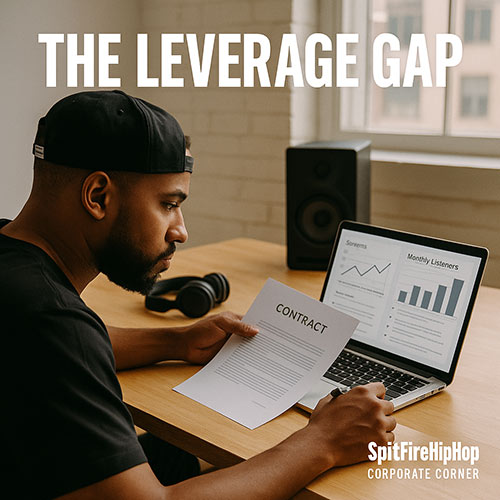
Momentum looks like power from the outside. Streams are up. Fans are active. Opportunities appear. Yet most artists still have no control over their careers. This disconnect is the leverage gap — and it explains why momentum alone rarely translates into ownership, influence, or security.
What the Leverage Gap Actually Is
The leverage gap is the distance between performance metrics and decision-making power. Artists often believe that growth automatically creates leverage. In reality, leverage only exists when the artist controls something the industry needs but can’t easily replace.
Streams show interest.
Fans show attention.
Leverage shows dependency.
Without dependency, there is no power.
Why Momentum Feels Like Leverage (But Isn’t)
Momentum is loud. It creates excitement, urgency, and perception. But perception doesn’t move negotiations; control does.
Artists with momentum still lack leverage when:
- platforms control distribution
- labels control capital
- marketers control access
- algorithms control reach
Momentum creates interest. Leverage creates terms.
How Labels and Platforms Define Leverage
From an industry perspective, leverage isn’t emotional. It’s structural.
True leverage looks like:
- direct access to fans
- predictable revenue streams
- ownership of IP
- proven retention over time
- multiple monetization paths
- the ability to walk away
If an artist can’t survive without a deal, they don’t have leverage, regardless of how good the numbers look.
Why Viral Artists Have the Least Power
Virality creates urgency, but urgency often benefits everyone except the artist.
Viral artists:
- peak before systems are built
- lack infrastructure
- need support immediately
- are easy to replace
This forces them into rushed decisions. The industry knows this, and prices deals accordingly.
The Industry’s Quiet Question
When evaluating an artist, every gatekeeper asks the same thing:
“What happens if we say no?”
If the answer is “they stall,” leverage is weak.
If the answer is “they keep growing,” leverage exists.
What Actually Builds Leverage Over Time
Leverage is engineered, not earned accidentally.
Artists with real leverage typically have:
- a functioning catalog flywheel
- measurable fan retention
- diversified revenue
- owned communication channels
- operational discipline
- time on their side
These artists negotiate slowly because they can.
Why Ownership Changes Everything
Ownership shifts the balance of power.
When artists own:
- masters
- publishing
- fan data
- merch channels
- release schedules
they reduce dependency. Reduced dependency increases leverage.
Leverage isn’t about saying yes louder; it’s about being able to say no.
Why Many Artists Lose Leverage Right When They Need It
Ironically, leverage often peaks before the big opportunity arrives.
Artists lose leverage when they:
- trade ownership for speed
- rush deals to maintain momentum
- outsource fan relationships
- prioritize exposure over control
By the time they realize what they gave up, momentum has already been monetized, just not by them.
How Independent Artists Close the Leverage Gap
Independent leverage doesn’t come from scale. It comes from independence itself.
Artists close the gap by:
- building revenue stacks before deals
- strengthening direct fan access
- pacing growth instead of rushing it
- treating offers as options, not exits
- operating as businesses, not hopeful creatives
Leverage is strongest when walking away is a real option.
The Corporate Corner Reality
Companies don’t negotiate from hype. They negotiate from position.
Artists who understand leverage stop chasing validation and start building infrastructure that forces better outcomes.
The Real Truth
Momentum opens doors.
Leverage decides who controls the room.
Artists don’t lose power because they aren’t talented.
They lose power because they confuse attention with authority.



Pingback: The Risk Nobody Talks About: How Artists Lose Everything After They Make It – SpitFireHipHop.com