


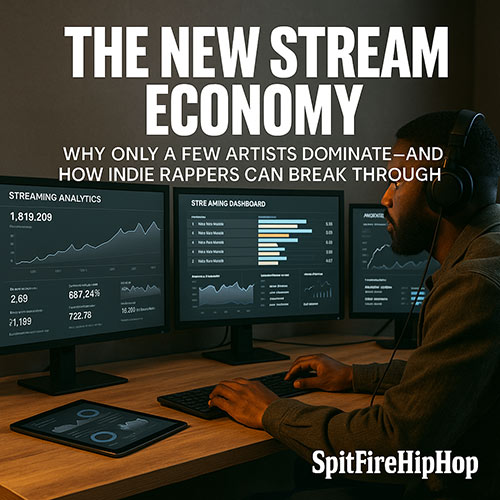
Streaming has turned Hip-Hop into a top-heavy ecosystem where a handful of megastars pull in millions daily. But beneath the surface, independent artists are finding new ways to win. The shift isn’t just about numbers—it’s about understanding the new stream economy.
The Streaming Pyramid: A System Built on Giants
In the modern Hip-Hop landscape, streaming power is heavily concentrated at the top. Artists like Drake, Kanye West, Travis Scott, and Future rack up millions of streams per day, even without releasing new music.
Why? Because the system rewards:
- deep catalogs
- constant playlist placement
- cultural familiarity
- repeat listening across global audiences
This creates a winner-take-most pyramid, where the top 1% of Hip-Hop artists capture nearly all of the daily streaming momentum.
But the story doesn’t end there.
Because the same system that favors giants also leaves massive openings for independent artists who understand how the machine works.
Why Only a Few Artists Dominate
Streaming platforms are designed to push what’s already performing—even if the songs aren’t new.
Major artists dominate because they benefit from:
- Catalog endurance
Older hits keep pulling streams daily, feeding algorithmic playlists. - Moods > genres
Big names appear in chill, workout, focus, and driving playlists that run 24/7. - Retention + skip rate advantage
Familiar voices rarely get skipped, boosting their ranking signals. - Algorithmic comfort
Platforms trust artists with known global engagement.
This creates a feedback loop:
streams → playlists → more streams → more playlists
Independent artists can’t replicate fame—but they can replicate strategy.
Where Indie Artists Can Win: Micro-Markets
While the top of the pyramid is locked, the middle and bottom are wide open for artists who build pockets of high engagement.
Indie Hip-Hop artists win by targeting:
- Niche styles (boom bap, lo-fi rap, lyrical street rap, phonk)
- Focused communities (Discord, Reddit, Instagram micro-audiences)
- High-engagement listeners (repeat listeners matter more than follower count)
- Thematic playlists (workout, chill rap, late-night, study beats)
Ten thousand deeply connected listeners outperform one million passive scrollers.
Playlists Are Not the Goal—They Are the Reaction
Most artists chase playlist placement like it’s a lottery ticket. But the new stream economy doesn’t work that way.
Playlists reward what the fans reward first.
You get added to algorithmic playlists when listeners:
- play more than 30 seconds
- repeat your track
- save the song
- add it to their own playlist
- share it
- don’t skip early
Those micro-events are currency.
The algorithm reacts to signals—not hope.
Release Strategy Matters More Than Ever
Indie artists who understand the streaming economy are adjusting releases with surgical precision.
Winning tactics include:
- Dropping singles instead of albums (algorithms favor frequency)
- Optimizing song intros (skip rate science from our last article)
- Using visual snippets before dropping
- Releasing alternate mixes or stripped versions
- Building catalog depth (multiple entries increase discovery chances)
Long-term wins now come from stacked catalog presence, not one big moment.
What Indie Artists Can Learn from the Giants
You don’t need superstar fame to use superstar strategy.
Here’s what scales down easily:
- Build a recognizable sonic identity
- Release consistently
- Create songs that fit into multiple moods
- Engage directly with your core audience
- Encourage fan playlists (they count more than editorial)
- Protect skip rate at all costs
- Expand your catalog—momentum compounds
The new stream economy isn’t fair.
But it is predictable.
And predictability means opportunity.


Pingback: The Mood Playlist Era: Why “Vibe-Based” Hip-Hop Outperforms Genre in 2025 – SpitFireHipHop.com