


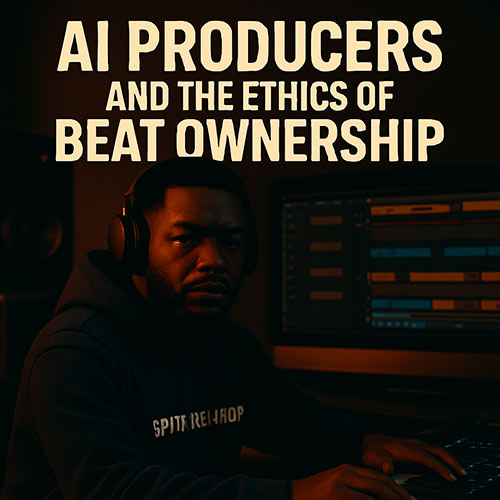
Artificial intelligence is changing how Hip-Hop is made—and challenging what it means to own a beat. As AI enters the studio, producers and artists face a new era of innovation, competition, and controversy.
The Rise of the AI Producer
AI-driven beat-making tools like Suno, Udio, and Boomy can now generate full instrumentals in seconds. What once took hours of crate digging and sampling is now the product of algorithms that learn from millions of songs. These AI producers mimic styles, create new sounds, and even emulate human creativity, but they raise the question: if the machine made the beat, who owns it? Is it the coder, the artist who prompted it, or the platform that trained it?
Creativity vs. Code
Hip-Hop was born from innovation, turntables, samplers, and MPCs all changed music forever. But AI challenges something deeper: authorship. When a human producer chops a sample, they’re transforming art through intention. When an algorithm does it, it’s pattern recognition, not passion. That tension defines the ethical crossroads Hip-Hop faces. Some argue AI is just another tool, like Auto-Tune or Fruity Loops. Others see it as cultural theft, machines trained on human creativity without permission or payment.
The Ownership Dilemma
AI platforms often claim partial rights to what they generate. That means if an artist releases a hit song using an AI beat, the underlying company could legally share ownership or royalties. It’s a dangerous trade-off for producers trying to stay independent. In Hip-Hop, where ownership has always been the path to empowerment, AI complicates that legacy. A new generation of creators must ask: do we control the tech, or does it control us?
Cultural Responsibility
Beyond legality, there’s culture. Hip-Hop is rooted in lived experience, pain, pride, and perspective that machines can’t replicate. AI may produce a convincing trap beat, but it can’t understand struggle or community. Producers are now using AI ethically, training models only on their own sounds or licensed libraries, to maintain integrity while innovating. The real challenge isn’t the tech; it’s how we use it. Hip-Hop has always adapted to disruption, but never at the cost of authenticity.
Protecting the Future Sound
Producers and beatmakers are starting to protect their art through metadata, blockchain registration, and copyright watermarks. These tools ensure human-created works stay traceable and secure, even in a flood of AI-made tracks. Platforms like BeatStars are adding “human-created” tags, and some labels are demanding transparency before signing artists who use AI tools. In this climate, transparency becomes a badge of honor, the difference between copying culture and contributing to it.
AI might help make beats, but it can’t make culture. The producers defining Hip-Hop’s next era are the ones using technology to amplify creativity, not replace it. As the lines between man and machine blur, the question isn’t whether AI belongs in Hip-Hop. It’s whether Hip-Hop can remain human while embracing the future.