




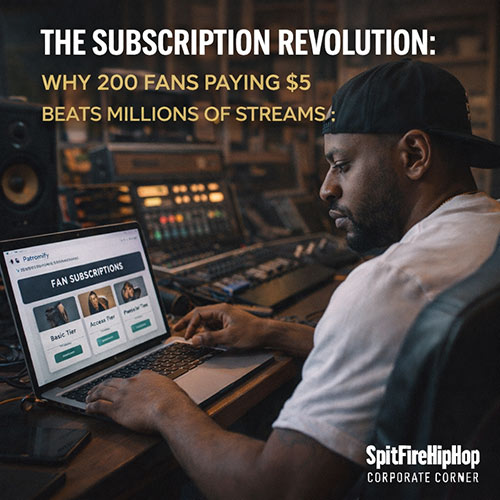
Streaming taught artists to chase scale. Subscriptions are teaching artists to build stability. In 2026, the most financially secure independent artists aren’t chasing millions of listeners — they’re cultivating hundreds of committed supporters who pay every month.
Why the Subscription Model Is Exploding
Subscription culture didn’t start in music; it matured there. Fans already pay monthly for content, communities, and access. Music is simply catching up.
What changed is trust. Fans no longer feel connected through passive streaming alone. They want proximity. They want context. They want to feel like insiders, not metrics.
Subscriptions answer that desire by replacing anonymous consumption with intentional support.
Why Streams Can’t Compete With Monthly Support
Streaming income is volatile. Algorithms shift. Playlists rotate. One bad release can reset momentum.
Subscriptions behave differently. They are predictable, compounding, and independent of platform whims. A small group of supporters can out-earn a massive audience that never converts.
This isn’t theory — it’s math.
The $5 Fan vs. the Million-Stream Myth
A million streams might generate a few thousand dollars, once. Two hundred fans paying $5 a month generate recurring income every month, year-round.
That revenue:
- smooths cash flow
- funds marketing and releases
- reduces dependency on advances
- increases leverage
Most importantly, it gives artists breathing room.
Why Fans Are Willing to Subscribe
Fans aren’t paying for music — they’re paying for belonging.
Subscriptions succeed when they offer:
- access to the artist
- early releases or exclusives
- behind-the-scenes content
- private conversations or livestreams
- community identity
Listen live on Spit Fire Radio → www.myksfr.com
Supporters feel like participants, not consumers.
The Psychological Shift Behind Subscriptions
When fans subscribe, they move from listener to stakeholder. That shift deepens loyalty. Subscribed fans defend artists, promote releases, and stay through slow periods.
Streaming fans come and go. Subscribed fans commit.
This changes how artists think about growth. Depth replaces width.
Why Subscription Revenue Changes Negotiations
Predictable income is leverage.
Artists with subscription revenue:
- negotiate partnerships from strength
- avoid rushed deals
- resist exploitative advances
- self-fund releases
- slow decision timelines
Subscriptions don’t just pay bills — they change posture.
Why Most Artists Fail at Subscriptions
Subscriptions fail when artists treat them like tip jars. Fans don’t subscribe out of guilt — they subscribe out of value.
Common mistakes include:
- offering vague perks
- inconsistent delivery
- treating supporters like ATM machines
- hiding behind paywalls instead of engaging
Subscriptions succeed through relationship maintenance, not scarcity tricks.
How Artists Structure Subscription Tiers
The most successful artists keep it simple. They don’t overwhelm supporters with complexity. They design tiers that reflect access, not obligation.
Effective tiers usually include:
- a low-cost entry tier ($3–$5)
- a mid-tier with access or exclusives
- a premium tier for direct interaction
The goal is sustainability, not pressure.
Why Subscriptions Beat Merch and Touring Alone
Merch and touring are episodic. Subscriptions are continuous.
When combined with merch and live shows, subscriptions:
- stabilize income between tours
- deepen fan relationships
- increase lifetime fan value
- reduce burnout
They don’t replace traditional revenue — they support it.
The Corporate Corner Reality
Companies build recurring revenue first, then scale. Artists who adopt subscription models are simply applying business logic to creative careers.
Recurring income creates freedom.
The Real Takeaway
Streams create awareness.
Subscriptions create security.
In 2026, artists who survive aren’t the loudest — they’re the most connected.
The future of independent Hip-Hop isn’t mass attention.
It’s meaningful support.




Pingback: Bundle Economics: How Merch + Subscriptions Are Beating Streams – SpitFireHipHop.com