




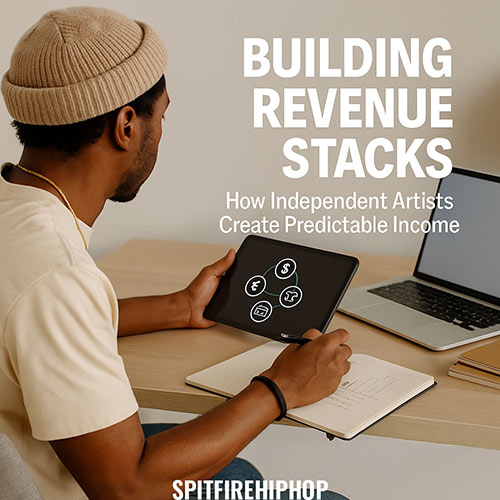
In 2025, the most successful independent artists aren’t chasing spikes — they’re engineering stability. While many creatives still hope one song changes everything, the artists who last build revenue stacks that pay consistently, regardless of algorithms or trending cycles.
Why Predictability Matters More Than Peaks
Viral moments feel exciting, but businesses don’t survive on adrenaline. They survive on repeatable income. For artists, unpredictability creates anxiety, burnout, and bad decisions made under pressure.
Predictable revenue gives artists leverage — time to create better work, control release timing, and negotiate from strength instead of desperation. Without it, every post and song feels like a gamble.
This is why revenue stacks matter. They turn careers from reaction-based into intentional.
What a Revenue Stack Actually Is
A revenue stack isn’t a single income stream. It’s a system designed so multiple sources work together, reducing risk while increasing lifetime value per fan.
Instead of asking, “How do I make more money?” stacked artists ask, “How many ways can one fan support me over time?”
That mindset change is everything.
Why Streams Alone Can’t Carry a Career
Streaming income scales slowly because it’s diluted. Even strong monthly listenership often fails to translate into stability. Algorithms shift. Playlists expire. Listener habits change.
Streams are valuable, but only as one layer, not the foundation. When artists rely on them exclusively, income remains fragile and inconsistent.
Revenue stacks exist to solve that exact issue.
The Core Layers of a Healthy Revenue Stack
Most sustainable artist businesses are built on a familiar combination — not complicated, but intentional.
A strong revenue stack usually includes:
- Catalog income from consistent streaming over time
- Direct-to-fan support, such as subscriptions or exclusive access
- Merch or digital products aligned with the artist’s identity
- Live or virtual experiences that deepen fan connection
- Limited drops or bundles that turn moments into transactions
The order matters less than the alignment. Each layer reinforces the others.
Why Small Numbers Beat Big Ones
Artists often assume they need massive audiences to earn real money. In reality, predictable revenue comes from engaged fans, not large crowds.
Two hundred supporters spending $10 a month creates more stability than thousands of passive listeners. That kind of income compounds quietly, without pressure to stay viral.
Revenue stacks reward loyalty, not volume.
How Catalog Strength Increases Every Revenue Stream
A growing catalog doesn’t just stream longer — it strengthens everything else.
When fans connect with one song, they explore others. That exploration increases:
- lifetime listening value
- merch relevance
- subscription retention
- event turnout
- brand trust
Catalog depth multiplies income without doubling effort. That’s corporate efficiency.
Why Artists Fail at Monetization
The most common failure isn’t greed — it’s hesitation.
Artists avoid monetization because they fear looking sales-focused or alienating fans. But fans don’t mind supporting artists they trust. What turns people off is confusion, inconsistency, or desperation.
Clear value beats awkward silence every time.
The Corporate Shift Artists Must Make
Corporations don’t ask, “What pays today?”
They ask, “What pays repeatedly?”
Artists who build revenue stacks:
- design releases with monetization paths in mind
- communicate consistent value to their core fans
- build systems once and improve them over time
- stop relying on emergencies to trigger income
This is how creative freedom becomes sustainable.
What Predictable Income Unlocks
Artists with stable revenue stacks experience fewer creative compromises. They release music when it’s ready, not when rent demands it. They take smarter risks. They last longer.
Predictability doesn’t kill art, it protects it.
The Real Goal
Revenue stacks aren’t about becoming rich overnight. They’re about owning time, energy, and direction.
When artists stop chasing peaks and start stacking income layers, careers become businesses, and businesses build futures.



Pingback: Thinking in Quarters: Why Hip-Hop Artists Must Stop Planning Like Singles and Start Planning Like Companies – SpitFireHipHop.com