

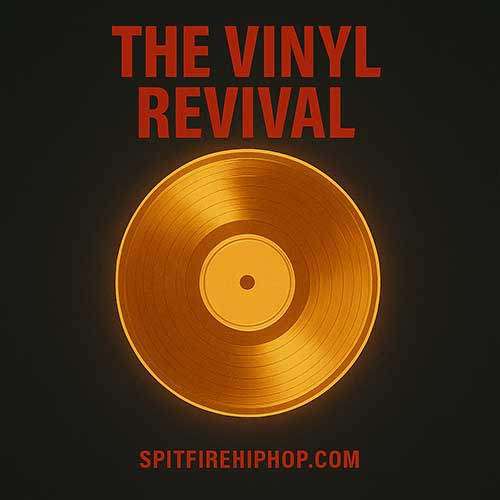
In 2025, vinyl isn’t just nostalgia—it’s rebellion. Young Hip-Hop artists are pressing wax not to chase trends but to reclaim ownership, preserve culture, and remind the world that some art still deserves to be held.
Once dismissed as outdated, vinyl has become a quiet revolution in Hip-Hop.
For decades, it symbolized DJs, turntables, and crate-digging. Today, it represents authenticity—a counter-move to digital disposability.
Independent rappers are realizing that vinyl isn’t just a retro novelty; it’s a physical legacy. Pressing a record is like stamping your name in time—a permanent document in a culture built on impermanence.
And fans are responding. Vinyl sales across all genres have surged year after year, but Hip-Hop is leading the cultural charge.
Why the Digital Era Pushed Artists Back to Analog
Streaming made music accessible—but also forgettable.
One day you’re on the algorithm; the next day, you’re gone.
Vinyl flips that script. It gives art weight—literally and symbolically. Listeners can’t skip your record with a swipe. They have to sit, listen, and engage. That’s power. For artists, vinyl means tangible ownership. No disappearing links, no platform dependency, no licensing traps. Just wax, artwork, and direct fan connection.
As one indie rapper said:
“Spotify can delete a stream. But it can’t delete my vinyl.”
Limited Drops: The New Flex
Vinyl’s scarcity gives it cultural and economic value.
Limited pressings, often hand-numbered or signed, have become collectibles, bridging music and fashion.
Artists like Freddie Gibbs, Griselda, and Roc Marciano proved that limited-edition records can sell out faster than digital singles. The underground Hip-Hop scene, in particular, has mastered the art of the micro-release, small batches for real fans, not bots.
This model turns music back into a community exchange, not a content dump.
Art, Sound, and Storytelling on Wax
Vinyl offers something streaming never will: ritual.
The cover art, the liner notes, the sequencing—all designed for immersion.
When fans drop the needle, they’re not just hearing a beat—they’re stepping into a story. This return to the album-as-experience is reshaping how new rappers think about production, packaging, and performance. For the artists who care about storytelling, vinyl is the purest format.
Economics of the Vinyl Hustle
Beyond aesthetics, vinyl makes business sense.
Pressing costs have dropped, and tools like Bandcamp and Shopify let artists sell directly to fans.
Unlike streaming royalties (fractions of pennies per play), a single vinyl sale can net real profit, $20 to $50 per unit. Artists who understand inventory, demand, and marketing are building micro-economies around physical music. And for collectors, vinyl isn’t just memorabilia—it’s investment-grade art.
Cultural Legacy: Pressing the Future
For Hip-Hop, vinyl’s comeback isn’t about sound, it’s about soul.
It’s about control, independence, and respect for the craft. Young rappers pressing wax aren’t trying to imitate the past; they’re defining a future that feels more human. They’re leaving something behind that can’t be deleted, updated, or skipped.
Vinyl isn’t just retro—it’s resistance.
As technology pushes music toward convenience, vinyl pulls it back toward connection.
For Hip-Hop artists, that’s not regression, it’s reclamation.
Because the culture was never meant to live only in the cloud, sometimes, the most revolutionary thing an artist can do is slow down the spin and press play on something real.