
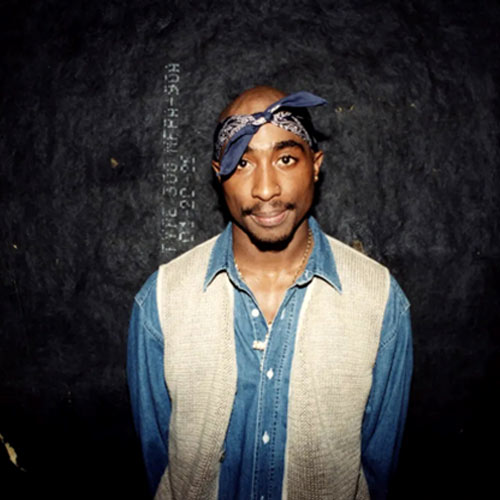
Silence. I stare at my computer for days after my editor asked me to write this piece with this title. It is blank, save the words at the top of the page. That is because I do not really know what to say, even as we stand at this 30th anniversary of the murder of Tupac Shakur. He is, easily, the most discussed rapper in the half-century annals of hip-hop, a global poet who rivals in mass popularity, affection and extreme curiosity, since his terrible passing, the likes of Elvis Presley, Marilyn Monroe, Princess Diana and the fallen Kennedys.
This has been no easy 30-year odyssey for me because I really did know Tupac. I spent significant time with him, talking, listening and writing about him, possibly more than any other journalist when he was alive, for Quincy Jones’ Vibe magazine and also for a sad Rolling Stone cover story when he was gone.
I’ve shed tears on many occasions throughout the years over Tupac’s demise. I’ve been hurt, confused, angry and, like his blood relatives and others dear to him, I have also had to carry the weight of seemingly never-ending trauma tied to Pac’s life and death, including the very recent murder trial.
This is not what I signed up for when I first saw Tupac, like truly saw him, in his debut film Juice in January of 1992. I was mesmerized by his acting, his presence, his charisma, his ability to transform himself, before our eyes, into one of the most notorious villains in American cinema. That screenshot led me down a rabbit hole about Tupac, given his eminent surname—Shakur—which I had heard often in Black activist circles as a youth and college student leader.
Little did I know the year 1992 would transform both my and Tupac’s lives forever. That motion picture made Tupac a ‘hood hero on his way to becoming a superstar. A month after seeing Juice, I became a cast member on the very first season of MTV’s The Real World—the legit original reality show in American television history—and shortly thereafter I began work on the inaugural cover for Vibe, about the rap group Naughty By Nature.
Listen to Spit Fire Radio: www.spitfireradio.com
I had no clue as I sat in the Harlem cinema absorbing the theatrical swagger of Tupac that, a few months removed, he would be clocking me on MTV. Similar to how Juice became an unapologetic social marker with a cult-like following, so too did our episodes of The Real World, transforming television in the process.
Well over a year forward, I was on assignment in Atlanta at a huge music festival called “Jack the Rapper,” branded after the pioneering Black radio personality, to produce another cover story about another electric young hip-hopper, Snoop Dogg. It was there I first met Tupac in person. I was with my then Vibe co-worker Karla Radford when we saw a throng of folks surrounding ‘Pac. I instantly became nervous and reserved, but Karla knew I was eager to not only report on Snoop but to document Tupac, too. Indeed, in an editorial meeting before the Atlanta trip I had presented a thick folder of my “findings” on Tupac, his mother, former Black Panther Party member Afeni Shakur, and other intel. I did my best to get the staff to grasp why I felt Tupac was an incredible amalgamation of street knowledge, living, breathing civil and human rights activism, and hip-hop influencer magic. To my chagrin, there was so little enthusiasm from the team about him.
But in a mystical Atlanta minute Karla pushed her way into the swarm of fans and said to Tupac that I, Kevin Powell, was going to write about him for Quincy Jones’ publication. ‘Pac lit up as he pivoted to see me, declared loudly he had watched me on MTV, that he had my back on the program as I famously and infamously argued racism with my castmates. Alas, I was a fan of Tupac’s, and he was a fan of mine.
This is how the divine line dance of me and Tupac began. Little did I know it would survey three full years, and feature scenes in Atlanta, Los Angeles, New York City, a penitentiary building in New York, and those lonely and agonizing days in Las Vegas as I sat in a gloomy hotel room while Tupac battled for his life at a nearby hospital.
Little did I know, as I recorded Tupac’s journey, through stunning music successes, multiple other film roles, his community initiatives, various arrests and acts of violence by him and upon him, including the first shooting where he survived five bullets, that I would become, as he asked of me during our very first sit-down conversation, Alex Haley to his Malcolm X. Indeed, in the earliest Tupac cover story for Vibe, manifested partly because he had emerged as well-known for his troubles with the law as he did for his sounds and movies, I proclaimed he was the James Dean of hip-hop. Little did I know how prophetic those words would become. Dean was dead by age 24, Tupac by age 25.

After the New York shooting, in 1994, I was the sole journalist in America Tupac gave his full story to, for a second Vibe cover. We conducted the discussion at the utterly depressing Rikers Island prison complex. It was him, me, his publicist Karen Lee, his lawyer Michael Warren, acclaimed Dutch photographer Dana Lixenberg, and prison guards lurking, digesting. It would become the most profound and problematic dialogue with a celebrity in my entire journalism career. Tupac spilled his soul to me, because he trusted me, because we were both young Black males in America, both born to strong, single Black mothers, and both of us had had harsh lives ridiculously young, had survived vicious poverty, ugly abuse, hate, self-hate, and the brutal slings and arrows of racism simply because of who we were. This was the real bond between Tupac and me. Hip-Hop, and pop culture, merely brought us together.
I thought, naively, foolishly, when he died that fateful day of Friday, September 13, 1996, that that was the end of it, for me. Little did I know that for 30 years and counting, as Tupac the rap star became Tupac the mythical figure, I would come to be regarded as some sort of expert on this man, his music, this movement that was his tragically brief life.
I knew Tupac as someone who was intellectually brilliant, well read, someone who admired artists as diverse as Vincent van Gogh and Prince, who had the courage to talk about issues, as a man, like abortion rights, when others would not dare. But he is also someone who was accused of sexual violence, which is how he landed in a New York jail cell. He was many things in his period on this earth, including the concluding cycle when I saw him in person, post-prison, on the set of the music video for his major anthem with Dr. Dre, “California Love.” I did not recognize this Tupac Shakur; nor who he was in our last voice-to-voice, via telephone, soon thereafter, for the groundbreaking “Live From Death Row” Vibe story that featured him, Suge Knight, Dr. Dre and Snoop Dogg on the cover. The experience of prison, and the sense of betrayal Tupac felt from many, had hardened him. They had made him both more reserved about who he let in and also more determined to lash out at anyone he felt had violated him.
Read the full article: Newsweek