
The Internet Never Forgets
A generation ago, artists could disappear between album cycles and largely control how the public saw them. Fans experienced artists through music videos, magazine interviews, concerts, and occasional television appearances. Information moved slower. Narratives developed over time. Public perception could be shaped carefully and strategically.
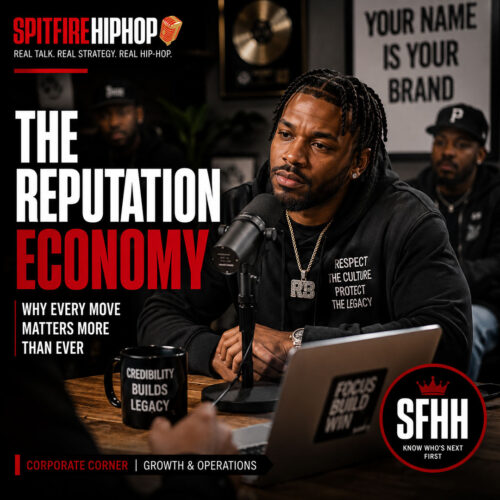
That world no longer exists. Today, artists live in a culture of constant visibility. Every post, interview, livestream, collaboration, comment, and public appearance contributes to how fans perceive them. Whether intentional or not, every interaction becomes part of their brand. As a result, Hip-Hop is entering something new: The reputation economy. And for many artists, reputation may become more valuable than attention itself.
Attention Opens the Door
For years, the industry operated inside the attention economy. The objective was simple: get noticed.
Artists fought for:
- views
- streams
- followers
- engagement
The assumption was that visibility would eventually create opportunity. To a certain extent, that remains true. Attention still matters. Artists need discovery. Fans need awareness. Platforms continue rewarding content that generates reactions.
But attention has become easier to acquire than ever before. A viral moment can happen overnight. A trending clip can generate millions of impressions. A controversial post can dominate timelines for days. The challenge is that attention is temporary. Reputation is what remains after the attention fades.
Fans Are Paying Attention to More Than Music
One of the biggest shifts in modern Hip-Hop is that fans no longer evaluate artists solely through their music. They evaluate them through behavior.
Audiences pay attention to:
- how artists treat supporters
- how they handle criticism
- how they speak during interviews
- who they collaborate with
- how they conduct themselves publicly
Fans build opinions through dozens of small interactions. Most of those moments are not career-defining by themselves. Together, they create a reputation. That reputation influences trust, loyalty, and long-term support in ways many artists underestimate.
Listen to Spit Fire Radio: www.spitfireradio.com
Every Decision Becomes Part of the Brand
The modern artist brand is no longer built exclusively through marketing campaigns. It is built through consistency. Fans notice contradictions. They notice authenticity. They notice integrity.
An artist who repeatedly demonstrates professionalism earns a different reputation than an artist who constantly creates unnecessary controversy. Likewise, an artist who consistently delivers quality work develops a different level of trust than one who repeatedly overpromises and underdelivers.
The audience is always observing. Whether artists realize it or not, every move contributes to a larger narrative.
Reputation Compounds Over Time
One reason reputation has become so powerful is that it compounds. Attention often arrives in bursts. Reputation grows gradually. A strong reputation creates opportunities that cannot always be measured immediately. It influences:
- collaborations
- business partnerships
- media relationships
- fan loyalty
- industry respect
Over time, those advantages begin stacking on top of one another. People want to work with artists they trust. Fans want to support artists they respect. Communities want to rally around artists they believe in. Reputation becomes a multiplier.
The Independent Artist Advantage
Independent artists may benefit from the reputation economy more than anyone else. Without massive marketing budgets, many independent artists rely heavily on relationships.
Their reputation influences:
- whether fans recommend their music
- whether promoters book them
- whether media outlets feature them
- whether collaborators return their calls
In many cases, reputation becomes a competitive advantage. Artists who consistently communicate, deliver value, and maintain strong relationships often outperform artists with larger audiences but weaker reputations. That reality is changing how growth happens across Hip-Hop.
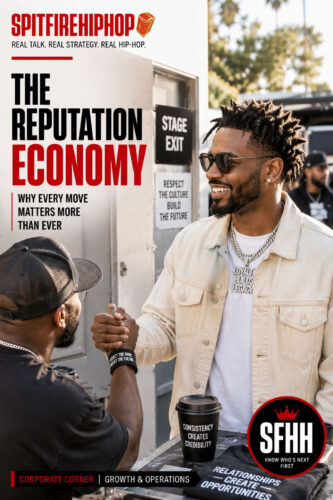
The Corporate Corner Perspective
The reputation economy represents the next stage of artist development. The attention economy taught artists how to get discovered. The trust economy taught them how to build loyalty. The reputation economy determines whether that loyalty becomes sustainable.
This is especially important in a digital environment where every platform is crowded, and every artist competes for visibility. Algorithms can amplify content. They cannot manufacture credibility. Credibility is earned through behavior. And credibility remains one of the few assets that cannot be easily replicated.
The Future Belongs to Reliable Artists
As Hip-Hop continues evolving, fans are becoming increasingly selective about who they support.
They are looking for artists who feel:
- consistent
- trustworthy
- professional
- authentic
Not because they expect perfection. Because they value reliability. The artists who thrive over the next decade may not be the artists who generate the most attention. They may be the artists who develop the strongest reputations.
Final Thoughts
In today’s Hip-Hop landscape, every move matters.
Every post.
Every interview.
Every collaboration.
Every public interaction.
The audience is constantly gathering information and forming opinions. Attention may create awareness. Trust may create connection.
But reputation determines whether people continue showing up long after the spotlight moves elsewhere. In the reputation economy, what people believe about you becomes almost as important as the music itself. And that makes reputation one of the most valuable assets an artist can build.