




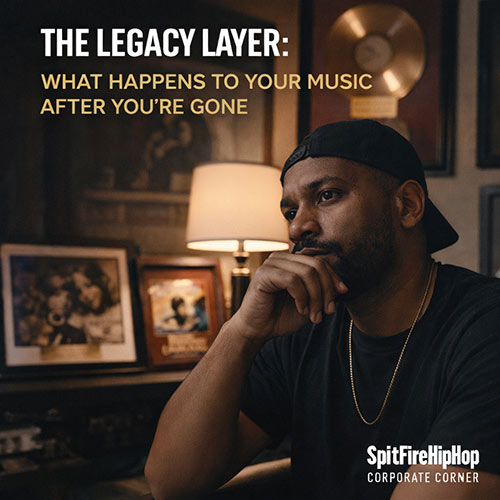
Artists spend their lives building catalogs, chasing ownership, and securing leverage. But very few stop to ask the most important question of all: what happens to this music when I’m no longer here? That question defines the legacy layer.
Why Legacy Is the Final Layer
Career success ends when an artist stops working. Legacy begins when the work continues without them. The difference between the two is planning.
Music doesn’t disappear when an artist does. Songs continue streaming, licensing, and earning for decades. Without intention, that value often gets mismanaged, diluted, or lost entirely. Legacy is not about ego—it’s about stewardship.
Why Legacy Is the Final Layer
Career success ends when an artist stops working. Legacy begins when the work continues without them. The difference between the two is planning.
Music doesn’t disappear when an artist does. Songs continue streaming, licensing, and earning for decades. Without intention, that value often gets mismanaged, diluted, or lost entirely. Legacy is not about ego—it’s about stewardship.
What Actually Happens to Music Without a Plan
When an artist passes without a clear structure in place, their catalog enters legal and operational limbo. Royalties can freeze. Ownership can fragment. Rights can be sold cheaply under pressure. The catalog may continue earning—but not for the people the artist intended.
In many cases, the music becomes a burden instead of a blessing.
How Catalogs Outlive Artists
Songs don’t age the way people do. They gain new listeners, re-enter culture, and resurface through films, playlists, and generational discovery. The strongest catalogs earn for 50, 70, or even 100 years.
That longevity only benefits the right people if systems exist to manage it.
The Difference Between Fame and Legacy
Fame is temporary. Legacy is intentional.
An artist can be famous and leave nothing behind. Another can remain niche and still pass down generational wealth. Legacy is not measured by headlines—it’s measured by durability.
Listen live: Spit Fire Radio → https://www.myksfr.com
How Catalogs Outlive Artists
Songs don’t age the way people do. They gain new listeners, re-enter culture, and resurface through films, playlists, and generational discovery. The strongest catalogs earn for 50, 70, even 100 years.
That longevity only benefits the right people if systems exist to manage it.
The Difference Between Fame and Legacy
Fame is temporary. Legacy is intentional.
An artist can be famous and leave nothing behind. Another can remain niche and still pass down generational wealth. Legacy is not measured by headlines—it’s measured by durability.
Why Estate Planning Is Creative Protection
Estate planning isn’t about death—it’s about clarity. It ensures the music continues to serve its purpose without distortion.
Artists who plan legacy:
- preserve artistic intent
- protect family interests
- prevent forced sales
- maintain catalog coherence
- retain negotiating power
This is creative control beyond a lifetime.
How Artists Build the Legacy Layer
Legacy planning doesn’t require massive wealth. It requires foresight.
Artists build the legacy layer by:
- organizing catalog ownership clearly
- assigning trusted stewards
- documenting rights and splits
- planning for continuity, not liquidation
- treating catalogs as cultural assets
Legacy is a system, not a sentiment.
How Artists Build the Legacy Layer
Legacy planning doesn’t require massive wealth. It requires foresight.
Artists build the legacy layer by:
- organizing catalog ownership clearly
- assigning trusted stewards
- documenting rights and splits
- planning for continuity, not liquidation
- treating catalogs as cultural assets
Legacy is a system, not a sentiment.
Why Hip-Hop Needs Legacy Thinking
Hip-Hop has created enormous cultural and financial value—but much of it has leaked away through poor planning and predatory systems. Legacy thinking ensures that future generations benefit from the art that shaped culture.
This is how Hip-Hop transitions from influence to inheritance.
The Corporate Corner Reality
Companies plan succession. Artists must do the same. The legacy layer is not optional—it’s the final responsibility of ownership.
The Real Takeaway
Your music will outlive you.
The only question is whether it will be protected, respected, and passed on—or picked apart by others.
Legacy doesn’t happen automatically.
It’s built deliberately.


Pingback: The Institutional Shift: When Artists Stop Playing the Game and Start Shaping It – SpitFireHipHop.com