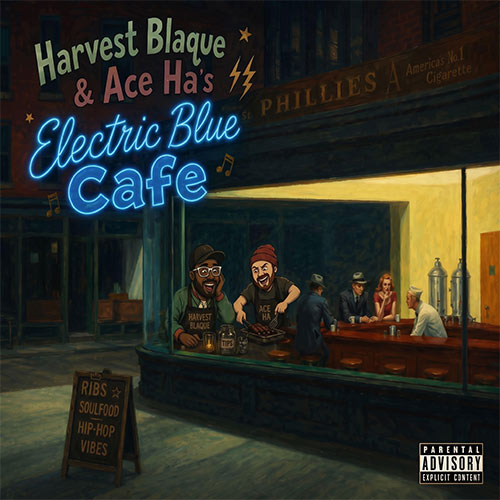
Harvest Blaque & Ace Ha Defend Their Peace on “Electric Blue Cafe”
Hurt follows Harvest Blaque into Electric Blue Cafe. So do pride, anger, and the determination to keep moving. Across the seven-track project with producer Ace Ha, the Roanoke artist returns to a difficult task: protecting his sense of self when other people keep trying to define, diminish, or use it.
That gives the project’s unapologetic stance some substance. The confidence has something to push against. Broken trust, outside judgment, and the pressure to prove himself give Harvest’s declarations of independence an emotional foundation.
The opening track, “We Got It From Here,” introduces that tension through damaged relationships and interrupted ambition. Its repeated reassurance sits beside verses concerned with disappointment and dreams losing their shape. A spoken message of encouragement near the end adds another perspective: confidence can come from someone reminding you that your life still belongs to you. It is a useful introduction to a project in which self-belief repeatedly has to contend with hurt.
“Black Licorice Radio” brings those pressures into sharper focus. Harvest moves between unequal relationships, wounded pride, and the appeal of turning to music for relief. The radio becomes a recurring point of return as the verses expose how much he is carrying. Particularly revealing are the passages about being judged for skin color and ways of speaking. They make the conflict specific: the narrator is being measured against expectations that leave little room for him to define himself.
The song’s references to earlier music and better days deepen that idea. Nostalgia offers somewhere to turn, even as the present continues intruding. “Black Licorice Radio” supplies one of the project’s clearest emotional centers because it allows resentment and the desire for comfort to occupy the same space.
Listen to Spit Fire Radio: www.spitfireradio.com
“Noize” changes the lyrical emphasis toward provocation and competitive confidence. Its recurring challenge to anyone trying to contain the artists turns the title into an assertion of presence. The references and boasts give Harvest room to be mischievous, adding another dimension to a project that also makes space for heavier concerns.
“The River” returns to the question of release. Confrontational verses lead into a refrain about being allowed to go, following the river, and entrusting the soul to God. That combination gives the song its central tension: the narrator can push back against people while still seeking freedom from the conflict itself. The river provides a concrete image for movement beyond what has held him in place.
“Don’t Matter” then states the project’s independent outlook more directly. Its refrain places action above arguments over who is better. Around that declaration, the verses return to clout, opposition, and the effort required to preserve peace. The title carries an aspirational quality in that context. Other people’s judgments plainly have consequences throughout the EP; this song expresses a determination to keep creating anyway.
“Sepsis” pulls the project toward more disturbing imagery. References to blood, breath, and oppression broaden the stakes beyond professional rivalry. The bodily language makes damage feel invasive, while accusations of hypocrisy and exploitation suggest how easily resentment spreads. Its position before the closer brings the EP’s anger into particularly sharp relief.
“Shade” gives the seven-track sequence a fitting final statement. Harvest addresses gatekeeping, unequal opportunity, and the frustration of working without inherited advantages. Its recurring lemonade image redirects hostility into something he can use. Following the earlier songs’ hurt and confrontation, that act of conversion gives the ending a purpose: outside judgment becomes material for continued expression.
Ace Ha receives the project’s production credit, with Bryan Hancock credited for lyrics and Byron Mack and Aaron Schilling for engineering and mixing on Bandcamp. The partnership has history, too: the standalone “Sepsis” listing credits Ace Ha as producer in April 2022. Electric Blue Cafe gathers that continuing relationship under a shared identity.
The EP’s strongest thread is the friction between self-possession and the things that threaten it. Several songs circle opposition, but their perspectives shift—from a wish for reassurance, to escape, to a declaration of independence. “Black Licorice Radio” and “Shade” are especially useful entry points into that arc. One exposes the weight of being judged; the other finds a response to it.
Harvest Blaque leaves the cafe with his frustrations still visible. Giving them form is part of the point. Electric Blue Cafe makes room for an artist to be wounded, combative, funny, and self-assured within the same body of work.