
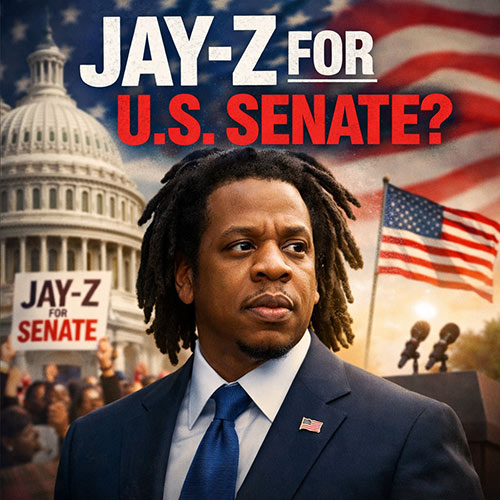
The internet woke up this week convinced that Jay-Z was officially seeking a U.S. Senate seat in New York. The posts spread quickly. Headlines were implied. Group chats lit up. Political Twitter did what political Twitter does.
But here’s the truth:
There is no official announcement, no FEC filing, and no verified reporting confirming that Shawn Carter is running for the United States Senate.
So why did the rumor catch fire?
Let’s unpack it.
The Origin of the Rumor
Like many viral political stories involving celebrities, the claim appears to have originated from social media posts lacking primary sourcing. No campaign press release. No filing documentation. No major outlet confirmation.
Yet it spread — fast.
That tells us something important: people don’t just believe the rumor. They find it plausible.
And that’s where this gets interesting.
Why People Believe Jay-Z Could Run
Jay-Z isn’t just a rapper. He’s a billionaire businessman, cultural architect, and founder of Roc Nation, an entertainment and sports agency with massive influence.
Over the years, he has:
- Advocated for criminal justice reform
- Partnered with political leaders on economic development
- Negotiated high-level corporate and civic deals
- Played a role in NFL entertainment strategy
He has also met with lawmakers in New York in the past — though those meetings were tied to business development projects, not electoral ambitions.
When you combine wealth, influence, civic engagement, and national name recognition, the leap from boardroom to ballot doesn’t feel impossible.
And that’s exactly why rumors like this stick.
The Power of the Celebrity-to-Politics Pipeline
We’ve seen it before.
High-profile entertainers pivot into public office. The blueprint exists. Celebrity recognition converts into political capital if the messaging aligns.
In Jay-Z’s case, he represents:
- Economic empowerment
- Black wealth and ownership
- Cultural leadership
- Institutional negotiation power
He also grew up in Brooklyn, built his empire in New York, and maintains strong ties to the state’s political and business infrastructure.
From the outside looking in, the narrative almost writes itself.
But here’s the key distinction:
Plausible does not equal factual.
No Evidence of an Official Campaign
As of now:
- No Federal Election Commission filing exists.
- No press conference has been held.
- No mainstream political newsroom has confirmed a run.
- No statement from Jay-Z or his team indicates political candidacy.
In modern American politics, Senate campaigns don’t quietly materialize. There are filings. Donor outreach. Staffing announcements. Infrastructure buildup.
None of that is present.
Which means the current claim remains unverified rumor — not developing news.
Why the Internet Wants This to Be True
Here’s where the cultural psychology matters.
Hip-Hop has evolved from outsider movement to institutional power. We’ve seen artists:
- Launch business empires
- Influence presidential campaigns
- Drive voter registration
- Shape corporate policy
The idea of one of the genre’s most powerful figures stepping directly into federal office feels symbolic. It represents arrival. Legitimacy. Evolution.
It also speaks to frustration.
Many fans feel traditional politicians don’t understand culture, economics, or community-level struggle. The idea of someone who built wealth from nothing — who understands both Wall Street and Marcy Projects — appeals to people who crave hybrid leadership.
But symbolism doesn’t equal candidacy.
Listen to Spit Fire Radio: https://www.spitfireradio.com
Could It Ever Happen?
Never say never.
Jay-Z has demonstrated:
- Long-term strategic thinking
- Comfort operating inside institutional frameworks
- Political networking capability
- Measured public messaging
However, he has also historically preferred influence without office. Power without ballot exposure. Strategic positioning rather than public campaigning.
Running for Senate would require:
- Public policy commitments
- Partisan alignment
- Campaign trail visibility
- Opposition research scrutiny
- Media cross-examination
That’s a fundamentally different game than boardroom negotiation.
For now, there’s no indication he’s ready to make that pivot.
The Bigger Issue: Misinformation in the Viral Era
This rumor is less about Jay-Z and more about how quickly unverified information spreads.
One viral post can:
- Generate thousands of shares
- Trigger reaction commentary
- Spark think pieces
- Blur the line between speculation and reporting
In Hip-Hop media especially, speed often beats verification.
At SpitFireHipHop, we move differently.
If there’s no filing, no statement, and no primary sourcing, we don’t present it as fact.
That’s how trust is built.
The Cultural Conversation Still Matters
Even if the rumor is false, the conversation it sparked is revealing.
It shows:
- Hip-Hop is seen as politically viable
- Cultural figures are viewed as legitimate leadership candidates
- The distance between entertainment and governance continues to shrink
Whether Jay-Z ever runs or not, the idea alone reflects how far Hip-Hop has traveled from the margins to the mainstream.
That’s a story worth covering.
Final Verdict
No — Jay-Z is not officially seeking a U.S. Senate seat in New York.
There is no confirmed campaign, no verified announcement, and no formal filing.
But the speed at which people believed it tells us something powerful about culture, influence, and perception.
And that’s where the real story lives.