


When Kid Rock recently referred to Jay-Z as an “NFL DEI hire,” the comment wasn’t just political noise.
It was cultural irony at its loudest. Because before the country-rock rebrand… before the American-flag arena tours… before the cable news soundbites… Kid Rock started in Hip-Hop.
And not casually. He built his early career inside the culture. So for him to question Jay-Z’s place in the National Football League — one of the most influential entertainment partnerships in modern sports — isn’t just controversial. It’s historically inconvenient.
Before Kid Rock was a country-rock nationalist figure, he was rapping. In the late 1980s and early 1990s, Kid Rock signed with Jive Records — the same label associated with foundational Hip-Hop and R&B acts.
His debut album Grits Sandwiches for Breakfast was straight rap. He toured with Hip-Hop artists.
He wore the aesthetic. He borrowed the cadence. He positioned himself within Black cultural space. Hip-Hop gave him an entry point. The culture gave him oxygen. And then, when rock audiences became more profitable, he pivoted. That pivot isn’t the issue. The amnesia is.
Let’s talk about Jay-Z’s resume before anyone reduces him to a “DEI hire.”
Jay-Z is:
- A 24-time Grammy winner
- A billionaire entrepreneur
- Founder of Roc Nation
- Architect behind major NFL entertainment partnerships
- An executive who brokered cultural alignment between Hip-Hop and corporate America
In 2019, Jay-Z’s Roc Nation entered into a partnership with the NFL to oversee Super Bowl halftime shows and social justice initiatives. That wasn’t diversity theater. That was business strategy. The NFL didn’t “hire diversity.” They hired influence.
The term DEI (Diversity, Equity, and Inclusion) has increasingly been weaponized to imply someone’s success is symbolic rather than earned.
Applying that to Jay-Z ignores:
- His decades of proven executive success
- His track record in business development
- His global cultural capital
- His influence across sports, music, and brand ecosystems
You don’t get handed influence at that scale. You build it.
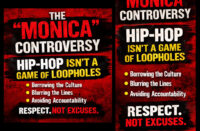
Here’s where the irony hits hardest. Hip-Hop has always been criticized from outside the culture — until it becomes profitable. Then it gets borrowed. Rebranded. Resold.
Listen to Spit Fire Radio: www.myksfr.com
Kid Rock’s early success was made possible because Hip-Hop is expansive. It allowed participation across race, geography, and style. Hip-Hop didn’t reject him for being white. It evaluated him based on contribution. So for a former Hip-Hop artist to now diminish a Black mogul’s corporate leadership as a diversity checkbox? That’s not critique. That’s selective memory.
The NFL partnership didn’t legitimize Hip-Hop.
Hip-Hop legitimized the NFL culturally.
Look at the last several Super Bowl halftime shows:
- Dr. Dre
- Snoop Dogg
- Eminem
- Rihanna
- Kendrick Lamar
Those weren’t “DEI moments.”
Those were ratings juggernauts.
Because Hip-Hop is not niche.
It is mainstream America.
This isn’t about Kid Rock vs. Jay-Z.
It’s about who gets questioned when they win.
Hip-Hop has spent 50 years proving:
- Cultural influence translates into economic power.
- Independent artists can become corporate architects.
- Black leadership in entertainment isn’t symbolic — it’s strategic.
Calling Jay-Z a DEI hire reduces decades of work into a talking point.
And Hip-Hop doesn’t forget who helped build it — or who tries to rewrite it. Kid Rock is entitled to his opinion. But history is entitled to accuracy. Jay-Z didn’t get hired because of diversity optics. He got hired because when you want culture, scale, credibility, and global reach — you call someone who built it. Hip-Hop doesn’t need permission. And it doesn’t need to be minimized.