



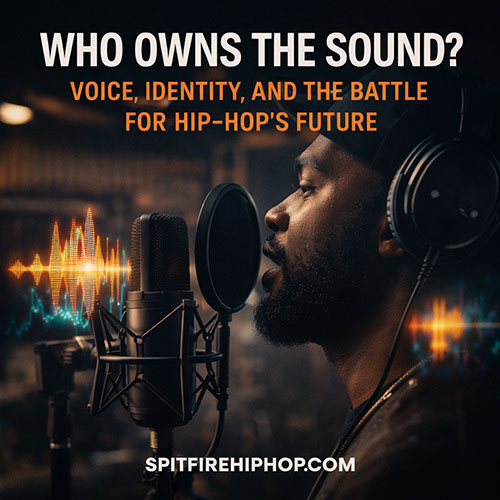
Hip-Hop has always been about owning your voice. But in 2025, that phrase means more than expression — it means protection. As AI, presets, and imitation grow, artists face a new question: who actually owns the sound they create?
Voice Is No Longer Just Performance — It’s Property
For decades, Hip-Hop artists fought for ownership of masters and publishing. Now, the conversation has shifted to something even more personal: vocal identity.
An artist’s voice — tone, cadence, delivery — is instantly recognizable. It’s branding, legacy, and emotional connection rolled into one. But new technology has blurred the line between inspiration and replication. Voices can now be mimicked, cloned, or reshaped without permission.
What was once untouchable is suddenly vulnerable.
The AI Moment Forced Hip-Hop to Draw a Line
AI didn’t create the problem — it exposed it.
As AI tools advance, artists and fans alike are questioning how far innovation should go. The issue isn’t whether technology belongs in Hip-Hop. The culture has always embraced new tools. The issue is consent, control, and credit.
Hip-Hop has a long history of setting its own rules when institutions fail to protect creators. This moment feels familiar. Just like early battles over sampling, streaming royalties, and ownership, artists are once again being asked to defend what’s theirs — this time, their literal voice.
Why Fans Are Reacting So Strongly
Scroll through comment sections and you’ll see it instantly: fans are protective of voice.
That’s because a voice carries truth. Fans don’t just follow songs — they follow identity. When a voice is imitated without permission, it feels like a violation of trust, not just a technical issue.
This is why podcast clips, live streams, and unfiltered artist conversations about voice ownership are outperforming traditional promo posts. Fans want reassurance that the artists they support aren’t being replaced, diluted, or exploited.
Independent Artists Have the Most to Lose — and the Most to Gain
For independent artists, voice ownership isn’t theoretical. It’s survival.
Without major-label legal teams, indie artists are often the first targets and the least protected. Yet they’re also the ones building the most personal connections with fans — which makes their voices even more valuable.
Protecting vocal identity now means:
- Being intentional about where and how vocals are used
- Understanding licensing, likeness rights, and AI clauses
- Treating voice as an asset, not just a performance tool
Platforms like Spit Fire Radio (www.myksfr.com) amplify artists who value originality and authenticity — not shortcuts or replicas.
Hip-Hop’s Next Evolution: Standards, Not Silence
This moment isn’t about fear. It’s about frameworks.
Hip-Hop doesn’t need to reject technology — it needs to define boundaries. Expect to see:
- Artist-led standards around voice usage
- Clearer disclaimers and protections in contracts
- New cultural norms about what’s acceptable and what’s exploitative
Just like past battles reshaped the music business, this one will shape the future of sound itself.
SpitFireHipHop Editorial Note
Hip-Hop was built on originality, struggle, and truth. Your voice isn’t just how you rap — it’s who you are. Protecting it isn’t resistance to progress. It’s respect for the culture.
At SpitFireHipHop, we don’t just ask who’s next — we ask who owns what they create.


Pingback: Algorithm-Proof Artist: Why Reach Doesn’t Equal Control – SpitFireHipHop.com