




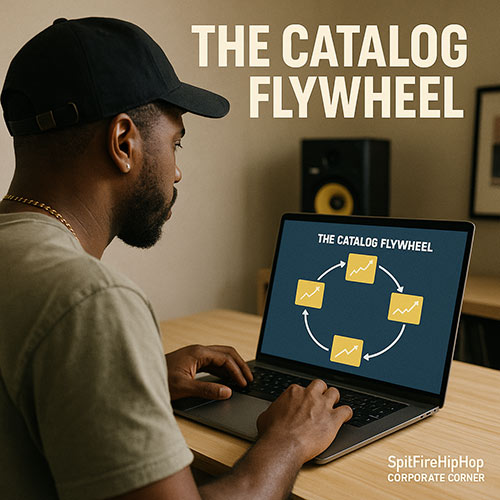
Most artists treat songs like disposable moments. Drop it. Promote it. Move on. But the artists who build lasting careers understand a different reality: songs aren’t isolated releases — they’re assets that power each other through a catalog flywheel.
What the Catalog Flywheel Actually Is
A catalog flywheel is the compounding effect created when each song strengthens the performance of every other song. Instead of starting from zero with every release, artists with flywheels experience momentum that carries forward.
When one song gains traction, it doesn’t just benefit itself. It pulls listeners into older records, increases session time, boosts saves across the catalog, and raises the artist’s overall algorithmic trust. Over time, the catalog becomes self-reinforcing.
This is why some artists seem to “never fall off.” Their music ecosystem is doing the work for them.
Why Hits Fade but Catalogs Compound
Hits spike. Catalogs stabilize.
A viral song can explode and disappear within weeks. A well-built catalog, however, accumulates value quietly. It grows through repeat listeners, playlists, mood placements, and algorithmic stations that don’t rely on hype.
Catalogs win because:
- listeners explore deeper once trust is established
- platforms reward longer listening sessions
- older songs gain new life from new releases
- retention improves with familiarity
A catalog doesn’t need to peak. It needs to persist.
How the Flywheel Starts Spinning
The flywheel begins when listeners move from a single song into a second, then a third. That moment signals to platforms that your music belongs together.
Artists often miss this step. They drop unrelated singles that feel disconnected emotionally or sonically. The system can’t link them, so momentum dies between releases.
Flywheels require cohesion.
Why Cohesion Beats Variety
Artists fear being boxed in. But cohesion isn’t limitation — it’s clarity.
When songs share:
- emotional tone
- sonic palette
- lyrical perspective
- visual identity
listeners feel oriented. They know what comes next. That familiarity increases replay and reduces drop-off. Over time, trust grows, and trust fuels the flywheel.
How One Song Revives the Rest
Every new release acts as a doorway into the catalog. When the catalog is structured well, new listeners don’t stop at the door, they wander.
This creates:
- back-catalog streaming spikes
- older songs resurfacing in playlists
- increased saves across multiple tracks
- higher artist confidence scores
One strong song can quietly pay you for years if it’s connected to a living catalog.
Why Playlists Love Catalog Density
Playlists don’t just place songs; they test ecosystems.
When a listener enjoys one song and immediately finds another from the same artist that fits the same mood, the playlist curator (human or algorithmic) gains confidence. That increases the likelihood of additional placements.
Thin catalogs struggle. Dense catalogs circulate.
The Mistake That Breaks the Flywheel
The fastest way to kill a flywheel is constant reinvention.
Artists often pivot:
- sound
- visuals
- tone
- branding
before the catalog has time to mature. Every pivot resets trust and forces listeners to re-evaluate whether the music still fits them.
Evolution matters, but only after momentum exists.
Designing Songs as Assets, Not Moments
Artists with flywheels don’t ask:
“Will this song pop?”
They ask:
“How does this song support the catalog?”
Asset-focused songs:
- fit a larger emotional system
- reward repeat listening
- connect naturally to older tracks
- age well instead of burning fast
This mindset turns creativity into long-term leverage.
Why Flywheels Reduce Burnout
When momentum compounds, pressure drops.
Artists with catalog flywheels don’t rely on constant promotion. Their music keeps working between releases. Fans discover old songs organically. Revenue becomes smoother. Anxiety decreases.
The system carries the load.
The Corporate Corner Reality
Companies build portfolios, not one-off products. Artists who build catalogs instead of chasing moments operate with the same logic.
Flywheels are how businesses scale quietly.
The Real Takeaway
Songs don’t succeed alone.
They succeed together.
Artists who understand the catalog flywheel stop starting over — and start stacking momentum that lasts for years.




Pingback: The Viral Trap: Why Going Viral Is Often the Beginning of the End | SpitFireHipHop