




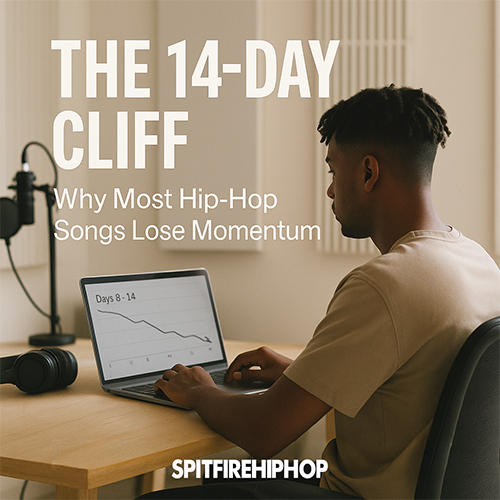
Most Hip-Hop songs don’t fail on release day. They fade quietly after it. In 2025, the real danger window isn’t week one—it’s days eight through fourteen, when platforms stop experimenting and start making long-term decisions.
Why the First Week Isn’t the Real Test
The first seven days of a release can be deceptive. Streams rise, engagement feels active, and artists believe traction is building. In reality, week one is fueled by novelty—followers checking in, early supporters showing love, and curiosity-driven listens from algorithms testing initial response.
That data matters, but it doesn’t decide a song’s future.
Platforms treat week one as reconnaissance. They watch how listeners arrive, how quickly they leave, and whether curiosity turns into real behavior. Nothing is locked in yet. Momentum is still artificial.
The real judgment hasn’t started.
What Happens Between Days 8 and 14
After the initial exposure phase, streaming platforms shift gears. Algorithms move from “testing” to “filtering.” This is where most songs quietly fail.
During days eight through fourteen, DSPs reevaluate performance with a harsher lens. They analyze how much intent remains once novelty fades. Songs that rely solely on first-week hype begin to slide.
Behind the scenes, platforms focus on signals such as:
- consistent saves beyond release day
- repeat listens from non-followers
- declining skip rates instead of rising ones
- playlist retention rather than playlist entry
- listener behavior after multiple exposures
If those signals flatten or fall, investment slows.
Why Artists Think They’ve Been Shadowbanned
When numbers drop suddenly, artists often assume something went wrong externally—shadowbanning, algorithm punishment, label politics, or platform bias. While those narratives are common online, they rarely reflect reality.
What’s actually happening is quieter and more mechanical.
The platform didn’t block the song.
It simply stopped pushing it.
Once a track shows limited long-term intent, algorithms shift attention elsewhere. There’s no alert, no explanation, and no dramatic cutoff. Discovery just…disappears.
That silence is the cliff.
Why Save Rate Becomes the Main Decider
By day eight, streams alone stop telling the story. Save behavior becomes the clearest indicator of future value. A save represents personal commitment. It signals that a listener plans to return.
Songs with steady saves after release continue receiving algorithmic chances. Songs without them don’t.
This is why artists experience frustration when snippets perform but songs stall. The exposure did its job—but the music didn’t inspire repeat ownership.
Algorithms don’t reward excitement. They reward attachment.
The Second Listen Tells the Truth
The most revealing moment in a song’s life isn’t the first play. It’s the second.
If listeners return voluntarily—after discovery, after curiosity—the platform sees long-term potential. If they don’t, the record loses leverage.
Many Hip-Hop tracks sound impressive once. Fewer feel useful multiple times. Songs that survive the 14-day window typically:
- maintain one clear emotional lane
- avoid abrupt energy drops
- feel familiar rather than exhausting
- reward background listening
- loop naturally
These traits don’t feel flashy, but they fuel longevity.
Why Content Behavior After Release Matters
Artists unknowingly sabotage their own momentum in week two. After release day, attention shifts to the next project, next snippet, or next announcement. Audiences feel the emotional disconnect.
During days 8–14, the song still needs reinforcement—not replacement.
When creators abandon the record early or redirect energy too quickly, fans interpret that shift subconsciously. The song feels temporary, so they treat it that way.
Longevity requires sustained emotional presence, not just release-day urgency.
What Songs That Survive the 14-Day Cliff Have in Common
Tracks that make it past this window often stabilize instead of exploding. Their growth looks slow, consistent, and unremarkable at first.
Then something interesting happens.
Months later, they:
- hold steady daily streams
- resurface on mood playlists
- dominate artist catalogs
- drive new fan discovery
- become reliable revenue sources
These records weren’t the loudest. They were the stickiest.
How Artists Can Design for the Second Week
Survival past day 14 isn’t accidental—it’s intentional. Artists who consistently break through design music and rollouts for continuity, not spectacle.
That starts with:
- emotional consistency from snippet to final verse
- replay-friendly arrangements
- post-release content that reinforces the song’s mood
- resisting the urge to abandon the track too quickly
- viewing week two as reinforcement, not cooldown
Growth requires patience where artists often rush.
The Bigger Truth About the 14-Day Cliff
The algorithm isn’t punishing artists.
It’s revealing reality.
Days eight through fourteen clarify whether a record is a moment—or a part of someone’s life. Platforms follow listener behavior, not artist ambition.
Songs that last do so because people keep choosing them.
Not because they were released louder.
Not because they were playlisted harder.
But because listeners wanted to return.



Pingback: The Second-Life Song: How Hip-Hop Tracks Resurface Months After Release – SpitFireHipHop.com