

The Royalties You’re Missing: Where Hip-Hop Artists Are Leaving Money on the Table
For years, independent Hip-Hop artists have been told that ownership is the goal. Own your masters. Keep your publishing. Stay independent. Build your catalog.
All of that matters.
But ownership only becomes financially meaningful when an artist understands how that ownership gets paid.
Thousands of independent artists release music through digital distributors, watch their Spotify and Apple Music numbers, receive deposits from their distributors and assume they are collecting the money their records generate.
They may not be.
A distributor can deliver a record to streaming platforms and collect revenue associated with the master recording without necessarily collecting every royalty generated by the underlying composition, public performances or certain digital performances of that recording.
That distinction represents one of the most important business lessons an independent Hip-Hop artist can learn:
Releasing your music and collecting all of the money generated by your music are two different things.
The modern music royalty system has multiple collection points. If an artist doesn’t understand them, money can exist somewhere in the system without ever reaching the person who created the record.
One Song. Two Copyrights. Multiple Revenue Streams.
Before discussing royalties, artists need to understand what they actually own.
A commercially released song generally contains two separate copyrighted works: the musical composition and the sound recording. The U.S. Copyright Office specifically distinguishes between them. The composition consists of the underlying music and lyrics, while the sound recording is the particular recorded performance of that composition.
Think about a rapper recording a song over a producer’s beat.
The lyrics and underlying music belong to the composition side.
The finished recording—the vocals, beat, mix and performance captured in the final audio—belongs to the master or sound-recording side.
Those copyrights can have different owners.
They can also generate different payments.
Listen to Spit Fire Radio: www.spitfireradio.com
An independent artist who writes the lyrics, participates in the composition and owns the finished master may therefore have economic interests on both sides of the record.
This is why simply checking a distributor dashboard does not necessarily tell an artist everything the song has earned.
The Money Your Distributor Collects
Most independent artists are familiar with this part.
An artist uploads music through a distributor. The distributor delivers it to digital service providers. When listeners consume the recording, revenue attributable to the master is reported through the distribution chain according to the applicable agreements.
This is the money artists typically think of when they say:
“My streaming royalties.”
But streaming can involve more than the master.
Interactive streams can also implicate the reproduction and distribution rights in the underlying musical work. The Music Modernization Act created a blanket licensing system covering qualifying digital uses such as interactive streams and permanent and limited downloads.
That means the same stream can create revenue on different sides of the copyright equation.
Your distributor paying you doesn’t necessarily mean every other royalty associated with that usage has been collected for you.
Mechanical Royalties: The Money Many Artists Don’t Think About
Mechanical royalties are particularly important for artists who write their own material.
In the United States, The Mechanical Licensing Collective (The MLC) administers the blanket statutory mechanical license for eligible digital uses of musical works and collects and distributes royalties under that system. The Copyright Office reaffirmed The MLC’s designation in June 2026.
Interactive streaming and certain downloads can generate these royalties.
This is where an independent rapper should stop thinking only like a recording artist.
If you write your lyrics, you are also a songwriter.
If you control publishing rights, you may also have interests as a publisher or publishing owner.
Those roles matter because the composition is generating its own economic activity.
The Copyright Office notes that songwriters and publishers need to register with The MLC’s claiming system to receive royalties through the blanket license.
A record could therefore be streaming successfully while money associated with the composition is not reaching the creator because ownership information hasn’t been properly registered or matched.
That’s not a streaming problem.
That’s a music-business infrastructure problem.
Performance Royalties: Your Song Can Earn Money When It Is Played
The composition can also generate public-performance royalties.
This is the territory associated with performing-rights organizations such as ASCAP, BMI and SESAC in the United States.
These organizations operate on the songwriter and publisher side of the business.
This distinction becomes especially important because artists sometimes confuse these organizations with SoundExchange.
They are not interchangeable.
SoundExchange itself explains that ASCAP, BMI and SESAC collect and distribute royalties for songwriters, composers and publishers, while SoundExchange’s statutory royalties concern featured artists and sound-recording copyright owners.
An independent rapper can potentially occupy several of those roles simultaneously.
You could be:
the songwriter,
the featured performer,
the publisher,
and the master owner.
One person. One song. Several rights.
That means several potential revenue channels.
SoundExchange: The Royalty Too Many Artists Confuse With Streaming Distribution
Then we arrive at one of the most misunderstood pieces of the independent music business.
SoundExchange.
SoundExchange collects and distributes U.S. statutory digital-performance royalties for certain uses of sound recordings on non-interactive digital services. Those royalties go to featured artists and sound-recording copyright owners.
Think services such as satellite radio, eligible webcasters and non-interactive digital radio.
This is not simply another name for the royalties coming through your distributor.
It is a separate collection system.
SoundExchange states that, under the statutory allocation, 45 percent of the performance royalties it collects goes directly to featured artists, 5 percent goes to a fund for non-featured performers, and 50 percent goes to sound-recording rights owners.
Now consider what that means for a completely independent artist who is both the featured performer and owns the master.
That artist potentially has interests in more than one part of the SoundExchange allocation.
But there is another important distinction.
Traditional U.S. AM/FM terrestrial radio does not currently provide the same federal sound-recording performance royalty to artists and record labels for over-the-air broadcasts. Songwriters and publishers can have performance royalties associated with terrestrial radio, but the master side operates differently.
Understanding those distinctions is what separates simply releasing records from managing music rights.
Producers Need to Understand This System Too
Hip-Hop cannot have an intelligent conversation about royalties without talking about producers.
The producer isn’t merely the person who emailed the beat.
Depending on the agreement and creative contribution, a producer may have publishing interests, contractual master royalties commonly called producer points, upfront production fees or other negotiated compensation.
Those things should not be treated as though they are automatically the same.
The Music Modernization Act also created a mechanism allowing producers, mixers and engineers to receive certain SoundExchange royalties through a letter of direction.
That makes documentation extremely important.
Who wrote the record?
Who produced it?
Who owns the composition?
Who owns the master?
What percentage belongs to each songwriter?
Does the producer receive points?
Was the beat purchased outright, licensed or created as part of a collaboration?
These questions should be answered while everyone is excited about making the record—not after the record starts generating meaningful money.
A split sheet may not be as exciting as the studio session.
Neither is discovering three years later that two people have completely different memories of what they agreed to.
Sync Can Turn a Catalog Into an Asset
Streaming encourages artists to think about music one play at a time.
Licensing encourages artists to think about music as intellectual property.
When a song is licensed for a film, television show, advertisement, game, trailer or other audiovisual production, permission may be required for both sides of the record: the underlying composition and the particular sound recording.
If an independent artist controls both, that can make the rights situation considerably simpler.
Instead of tracking down multiple parties to clear the song, a music supervisor may be able to deal with one rights holder or team controlling both sides.
This is one reason owning masters and publishing can become strategically valuable beyond streaming.
The song isn’t merely content anymore.
It is a licensable asset.
And a record doesn’t need 50 million Spotify streams before that asset has value.
The right independent song attached to the right scene, campaign or project can create an entirely different economic opportunity.
Your Catalog Can Keep Working After the Release Campaign Ends
Hip-Hop’s obsession with the newest release can hide one of music ownership’s greatest advantages.
Songs don’t have expiration dates.
A single might receive its biggest promotional push during its first few weeks, but the underlying rights can continue generating income long afterward.
A record released five years ago can be streamed today.
It can receive digital-radio plays.
Its composition can generate performance royalties.
It can be licensed.
It can be sampled.
It can appear in user-generated content.
It can experience renewed interest because of another release.
That changes how independent artists should think about catalogs.
Your catalog isn’t simply a collection of old songs.
It is a portfolio of intellectual-property assets capable of producing multiple forms of revenue.
That makes metadata, registrations, agreements and ownership records part of catalog management.
The Metadata Problem Is a Money Problem
One of the least glamorous aspects of music may also be one of the most financially important.
Metadata.
Names need to match.
Song titles need to match.
Writer information needs to be correct.
Ownership percentages need to be documented.
ISRCs and other identifiers need to be properly associated with recordings and works.
The MLC’s system, for example, depends on matching musical works with recordings and their owners. Federal regulations specifically address information including sound-recording titles, featured artists and ISRCs when connecting recordings to musical works.
If the data is wrong, incomplete or inconsistent, the royalty system has a harder time determining who should receive the money.
Independent artists spend enormous amounts of energy trying to generate streams.
They should spend some energy making sure those streams can be connected to the correct rights holders.
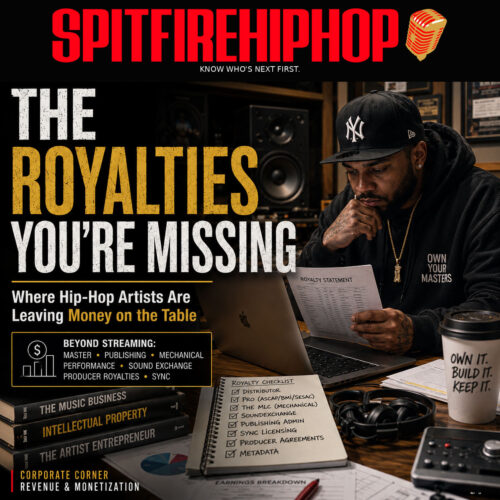
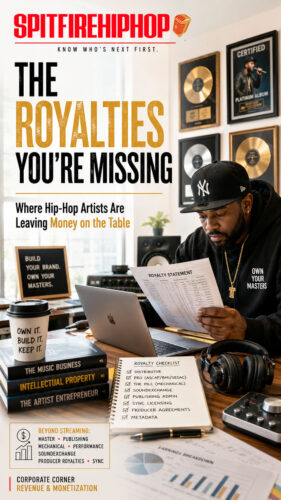
The Independent Artist Royalty Checklist
Before considering a release administratively finished, artists should be able to answer these questions:
- Master: Who legally owns the sound recording, and is the distributor information correct?
- Composition: Who wrote the lyrics and music, and are the splits documented?
- PRO: Are the songwriter and publishing interests properly registered with the appropriate performing-rights organization?
- Mechanical: Are eligible works correctly registered and claimed through The MLC or handled by the artist’s publishing administrator?
- SoundExchange: Are the featured artist and sound-recording owner properly registered and recordings claimed where applicable?
- Producer: Is there a written producer agreement establishing fees, publishing, points and any other participation?
- Metadata: Do names, titles, splits and identifiers match across the relevant systems?
- Sync: Is it clear who has authority to approve licenses for both the master and composition?
- Records: Can the artist produce the agreements establishing ownership if a dispute arises?
None of this guarantees that a record will generate significant income.
It does something equally important:
It gives the record a better chance of delivering the income it does generate to the correct people.
Stop Thinking Like Someone Who Uploads Music
This is ultimately where independent Hip-Hop has to evolve.
Distribution democratized access.
Artists no longer necessarily need a major record company to put an album in front of listeners around the world.
But distribution didn’t eliminate the music business.
It transferred more responsibility to the artist.
If you want ownership, you also inherit the responsibilities that come with ownership.
That means understanding copyrights.
Understanding publishing.
Understanding masters.
Understanding metadata.
Understanding registrations.
Understanding contracts.
And understanding where the money travels after somebody presses play.
The independent artist of the future cannot afford to think only like an artist.
The artist has to think like a rights owner.
Because having 100 percent ownership of something while collecting only a fraction of the revenue it generates isn’t independence at its highest level.
It’s incomplete infrastructure.
Your distributor dashboard tells you part of the story.
Your royalty infrastructure tells you whether you’ve built a business.
And in an era where artists constantly ask how many streams it takes to make a living, perhaps the better question is:
Are you collecting everything the music you already made is earning?
Editorial Disclaimer: This article is intended for educational and informational purposes only and does not constitute legal, tax, financial, or accounting advice. Music rights and royalty collection can vary based on contracts, ownership, territory, and individual circumstances. Artists and rights holders should consult qualified professionals regarding their specific situations.