
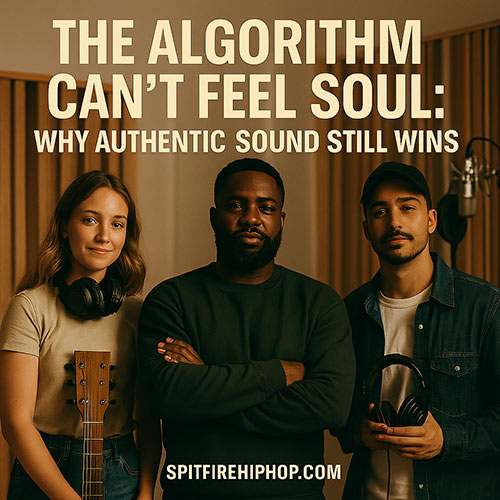
In an era where playlists dictate popularity and algorithms decide what gets heard, a quiet resistance is rising in Hip-Hop. Beneath the mechanical precision of digital curation, a generation of artists is returning to what made the culture powerful in the first place: soul, storytelling, and authenticity.
The Machine’s Grip on Music
Streaming services have changed the way we discover Hip-Hop. Every day, artificial intelligence determines which tracks land in “RapCaviar” or “Discover Weekly,” optimizing for clicks, not connection. The industry’s obsession with virality has flattened sound, rewarding formulaic beats and 30-second hooks.
But something is shifting. Listeners are tuning out. Artists are pushing back. And the streets, once again, are leading the rebellion.
Real Emotion Still Resonates
When a record like J. Cole’s “The Climb Back” or Nas’ “Magic 3” hits, it cuts through the noise precisely because it feels human. Listeners crave something the algorithm can’t simulate: emotion. The imperfections in a verse, the rasp in a hook, the urgency in a freestyle—those details are what algorithms will never compute.
Independent artists are finding success by leaning into that humanity. Tracks that sound raw, imperfect, and deeply personal are thriving on smaller, organic platforms like Audiomack and SoundCloud. Real music finds real people.
AI in the Booth vs. Soul in the Studio
Artificial intelligence is already producing beats, generating lyrics, and even imitating voices. While some see it as innovation, others see it as imitation. Hip-Hop was never meant to be optimized; it was meant to be felt.
The human touch, the crackle of vinyl, the off-beat drum loop, the freestyle that wasn’t meant to be perfect, is the soul of the genre. The rise of AI-produced tracks may change how music is made, but it can’t replace the cultural depth that comes from lived experience. As one producer told Spit Fire Hip Hop: “AI can make a beat, but it can’t live a verse.”
The Return of the Authentic Sound
A growing wave of producers and emcees are now turning away from algorithmic precision and back to analog warmth. Vinyl sampling is resurging. Live instrumentation is back. Artists are pressing limited-edition vinyls and performing intimate shows that reconnect them with fans outside of the algorithm’s reach.
The trend echoes Hip-Hop’s earliest roots: storytelling, connection, and rebellion. The new generation isn’t just creating music; they’re creating movement.
Why the Soul Still Wins
The truth is, data can predict a trend, but it can’t feel struggle, joy, or pain. That’s why artists who stay authentic continue to win long-term. From Kendrick Lamar’s introspective masterpieces to underground lyricists dropping tapes out of their trunks, the power of human truth keeps cutting through digital noise.
As the culture evolves, one fact remains: no matter how advanced AI becomes, Hip-Hop will always belong to those who live it, breathe it, and bleed it.
The algorithm may dominate the charts, but soul still owns the culture.