
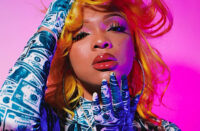


For the first time in 35 years, not a single Hip-Hop or rap song cracked the Billboard Top 30. The culture that once dominated every chart, every playlist, and every conversation is suddenly facing a historic moment of silence, and everyone wants to know why.
A Shockwave Through the Culture
When the news dropped that the Billboard Top 30 was completely rap-free, the Hip-Hop world reacted like someone hit the emergency brake. This isn’t just a slow week or a seasonal dip. This is unprecedented. For decades, Hip-Hop wasn’t just part of the charts — it was the charts. From the mid-90s through the 2000s and the streaming explosion of the 2010s, rap owned the algorithm, dominated the trends, and powered the most influential artists on the planet.
Now? Crickets. Pop, Latin, country, dance, Afrobeats, and R&B are all moving, but Hip-Hop is noticeably absent from the highest-performing tier. The real question becomes: what changed?
The Oversaturation Era Finally Caught Up
For years, the industry warned about quantity over quality. Music became fast food — short songs, endless releases, copy-paste beats, microwave moments. When everyone is doing the same flows, the same TikTok-optimized hooks, and the same aesthetic, the mainstream eventually stops listening.
Listeners weren’t rejecting Hip-Hop.
They were rejecting repetition.
The absence on the chart reflects a culture that needs recalibration, not replacement.
The Rise of Other Genres Filled the Vacuum
While Hip-Hop was cooling off creatively, other genres were heating up. Pop artists started taking bigger risks. Country had a massive mainstream crossover moment. Afrobeats became global. Latin music surged. R&B returned with a more cinematic, modern aesthetic. Dance and electronic music fueled social platforms.
Hip-Hop didn’t get pushed out.
It paused while everyone else pushed forward.
Mainstream Rap Lost Its Emotional Core
For 35 years, Hip-Hop won because it meant something. Whether it was struggle, triumph, storytelling, flexing, heartbreak, rebellion, or pure grit — the music had soul. But in the last few years, the center of mainstream rap shifted toward surface-level records built for playlists, not people.
Meanwhile, meaningful Hip-Hop didn’t disappear — it just returned underground. Artists with substance are dropping albums, but they’re not the ones labels are pushing into Billboard territory.
The culture is alive.
The machine is tired.
TikTok Changed Consumer Behavior
Another major shift: people aren’t discovering full songs anymore — they’re discovering moments. A five-second soundbite will go viral, but the full track might never convert into streams.
For Hip-Hop, a genre built on bars, narratives, personality, and full-song energy, this is a challenge. A snippet might trend, but it doesn’t guarantee the track climbs the charts.
Rap Is Evolving While the Charts Lag Behind
Here’s the twist: even though Billboard’s Top 30 is empty of rap, the global influence of Hip-Hop has never been bigger.
- Producers are shaping every genre
- Rap flows show up in pop, country, and Latin music
- Hip-Hop aesthetics dominate fashion and social media
- Underground artists have stronger communities than ever
This chart anomaly says more about the industry than the culture itself.
Hip-Hop isn’t dying.
It’s regrouping.
A Historic Reset — Not a Decline
The absence of rap in the Top 30 is a loud alarm clock. It’s telling the industry that the formula is broken. It’s telling artists that the audience is hungry for something real again. It’s telling the culture that the next wave of Hip-Hop can’t rely on algorithmic shortcuts.
This moment isn’t the end.
It’s the beginning of a renaissance.
Hip-Hop has reinvented itself every decade — from the boom bap era to the bling era, from trap to drill, from SoundCloud to TikTok. Each time, the culture came back sharper than ever.
There’s a storm gathering.
The next wave of artists — hungry, creative, narrative-driven, sonically bold — is already rising.
And when they break through, the charts won’t just feel the shift.
They’ll have to rebuild around it.