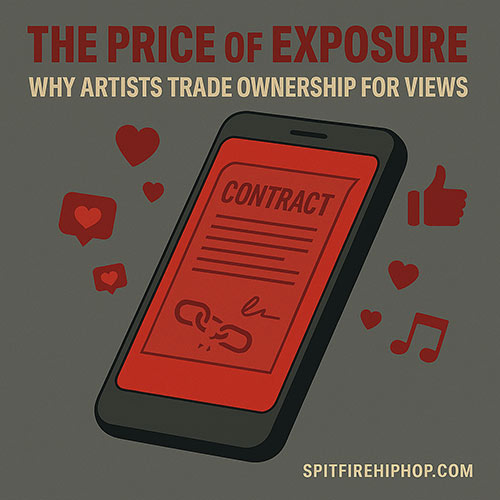
In 2025, exposure has replaced the record deal as Hip-Hop’s biggest currency. Artists are trading ownership for visibility, caught in an algorithmic system that rewards content output but often punishes creative control.
The Illusion of Exposure
Every artist wants to be heard. But on platforms like TikTok, Spotify, and YouTube, visibility often comes at a hidden cost: ownership. When artists sign short-term distribution deals, use “free” beats with hidden publishing clauses, or license songs to playlists controlled by third parties, they may gain plays but lose rights.
Labels and digital distributors promise exposure, placement on key playlists, Reels features, influencer tie-ins—but those promotional pipelines often come with back-end agreements that siphon long-term royalties. The exposure looks glamorous; the reality is often a shrinking slice of the pie.
Algorithms as the New Middlemen
The old gatekeepers, A&Rs, radio DJs, and blog curators have been replaced by algorithms. But unlike a person, an algorithm doesn’t care about art, message, or community. It optimizes only for engagement.
To keep feeding that machine, artists now churn out constant content, repackage singles into clips, and adjust their sound to fit what’s trending. The goal isn’t always authenticity anymore; it’s retention. For independent artists, that can feel like both liberation and confinement: free from labels, but enslaved by metrics.
The Rise of the “Exposure Economy”
The music business has evolved into an exposure economy, where streams, followers, and likes are treated like currency. In this model, artists often give away masters, sync rights, or publishing cuts to gain short-term reach. Labels and distributors exploit that hunger for visibility, offering upfront boosts that look attractive but reduce future income.
Even marketing companies mirror this dynamic, offering “exposure” instead of payment for collaborations or appearances. For upcoming rappers desperate for traction, the trade feels worth it until the royalty checks come in light or nonexistent.
Independent Doesn’t Always Mean Free
The modern independent artist faces paradoxes that didn’t exist before. Distributors like DistroKid, UnitedMasters, and TuneCore promise control, but many deals include automatic backend claims for playlist placements, sync opportunities, or algorithmic promotion.
It’s not exploitation in the classic sense; it’s digital fine print. Ownership gets diluted through service terms that artists rarely read but routinely agree to in pursuit of visibility.
The result: a generation of creators who own their catalog on paper but not their revenue in practice.
Why Artists Still Take the Risk
Exposure still matters. A viral TikTok or Spotify editorial feature can catapult a song into six figures of income. The temptation is real—and sometimes justified. The key difference lies in strategy. Artists who leverage exposure without giving up publishing, sync rights, or long-term ownership are building sustainable futures.
The trade-off only becomes dangerous when visibility replaces vision.
Reclaiming Ownership in the Exposure Era
To beat the system, artists are learning to flip it.
- Direct-to-Fan Sales: Selling digital vinyl, limited drops, and NFTs with ownership clauses.
- Fan Subscription Models: Patreon and Bandcamp memberships that create recurring income.
- Independent Marketing: Using analytics, AI tools, and community growth to drive streams organically.
Control comes from understanding that algorithms amplify content—but ownership amplifies legacy.
Cultural Consequence: Control or Captivity?
Hip-Hop was built on independence, yet the digital age risks turning independence into an illusion.
The culture that once shouted “own your masters” now faces a new kind of master, the algorithm.
But every movement in Hip-Hop history has found its rebellion. The next generation of rappers, producers, and entrepreneurs is that rebellion, learning the system, monetizing knowledge, and flipping exposure into equity.
The price of exposure is higher than most artists realize. Every viral clip, every playlist add, every “free” opportunity carries a cost. The artists who will win in 2025 are those who don’t just play the algorithm—they own their art beyond it.