


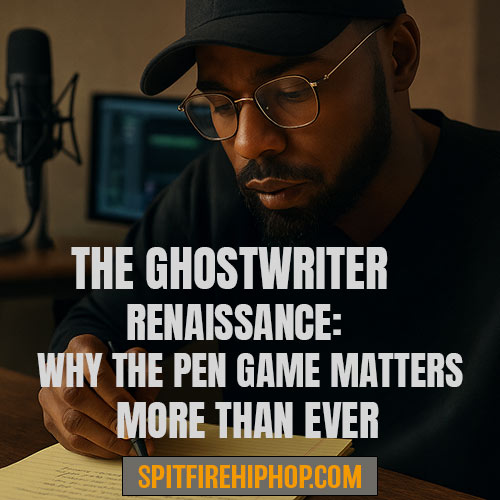
The pen is back in power — and in 2025, ghostwriters are reshaping the sound, structure, and success of modern Hip-Hop.
The Silent Architects Behind Today’s Biggest Records
Ghostwriting in Hip-Hop isn’t new — but the shift happening now is. In the last few years, more artists, labels, and producers have begun openly relying on specialized lyricists to craft radio-ready hooks, build narrative arcs, and elevate songwriting quality.
This change isn’t driven by scandal. It’s driven by strategy.
The explosion of independent music, the rise of AI-assisted production, and the pressure to release constant content have pushed artists to build teams that look more like film studios: directors, editors, composers, and writers.
Right now, elite ghostwriters aren’t behind the curtain — they’re behind the culture.
Why Pen Game Matters More Than Ever in the Streaming Era
Streaming changed how Hip-Hop is consumed. Shorter attention spans, faster release cycles, and playlist-driven discovery put a spotlight on what many artists struggle with most:
consistent songwriting quality.
This created a perfect storm for a ghostwriter renaissance driven by three forces:
1. Hook-Driven Hits
Playlists reward songs that stick in the first 7 seconds.
Ghostwriters specializing in melodic hooks, chantable refrains, and rhythmic one-liners are now the backbone of viral tracks.
2. Release Speed & Volume
With artists dropping singles monthly — sometimes weekly — lyrical burnout is real.
Ghostwriters help artists keep pace without sacrificing complexity or structure.
3. Authenticity Matters More, Not Less
Ironically, the ghostwriter era has increased the value of authentic voices.
Writers today aren’t crafting full personas; they’re refining messages, sharpening delivery, and helping artists express themselves more clearly.
The goal isn’t to replace the artist.
The goal is to amplify the artist.
The Rise of the “Writer’s Room” in Hip-Hop
Historically, writing rooms were a pop and R&B staple.
Now they’re everywhere in Hip-Hop:
- indie artists outsourcing hooks
- mid-tier artists hiring structure editors
- major labels employing full-time rap writers
- regional collectives forming lyricist pools
- ghostwriters branding themselves as “creative consultants”
This shift reflects Hip-Hop’s maturation.
A $12B industry isn’t leaving its songwriting to chance.
Today, the “pen” is a respected craft — and writers are stepping into the light.
Ghostwriters as Influencers, Not Shadows
A decade ago, ghostwriters were hidden.
Today, they’re:
- selling songwriting courses
- posting breakdowns on TikTok
- launching YouTube lyric analysis channels
- showcasing reference demos
- releasing their own albums
- being credited on streaming platforms
Hip-Hop fans now see them as technicians, not traitors.
The culture has grown past the myth that real artists must do everything themselves.
As Hip-Hop becomes more global, collaborative writing is becoming the norm — not the exception.
AI: Threat to Writers or the Biggest Opportunity Yet?
AI hasn’t replaced ghostwriters — it’s made them more valuable.
Why?
Because AI can generate ideas.
But only humans understand lived experience, cultural nuance, code-switching, slang evolution, regional rhythms, and emotional truth.
Writers who know how to:
- use AI for ideation
- refine AI-generated drafts
- shape authentic lyrical identity
…are doubling their output and doubling their income.
AI didn’t kill the pen.
It supercharged it.
The Future: Ghostwriters Becoming Stars in Their Own Right
The next generation of Hip-Hop will celebrate the pen as much as the performer.
Expect to see:
- ghostwriter-focused documentaries
- songwriter award shows
- Hip-Hop writing camps
- public writer credits on major albums
- lyricist podcasts
- more dual artist/writer careers
If Hip-Hop began with storytelling, its future belongs to the storytellers.
The Ghostwriter Renaissance isn’t a trend — it’s a correction.
A return to lyricism, craft, and the belief that bars still matter.