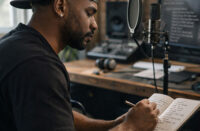

In 2025, Hip-Hop remains the world’s most-streamed genre, but not all artists are benefiting from the boom. Beneath the surface of viral playlists and AI-driven recommendations, a new struggle has emerged: artists versus the algorithm.
For many independent Hip-Hop artists, visibility has become a fight not against competition, but against digital systems deciding what music gets heard. Platforms like Spotify, Apple Music, and TikTok rely on machine learning to curate what users see and hear. While convenient for listeners, these algorithms can quietly bury underground voices, particularly those without label backing or massive engagement data.
The Invisible Wall of Algorithmic Bias
“Music discovery isn’t about discovery anymore,” says one independent artist featured on SpitFireHipHop Radio. “It’s about feeding the machine what it wants.” Algorithms reward consistency, engagement, and repetition, favoring artists who drop content often, use trend-based sounds, or spark viral moments. That structure locks out creatives who value quality and storytelling over quantity and hype.
Data from Chartmetric and Music Business Worldwide shows that Hip-Hop accounts for nearly 30% of all streaming consumption globally, yet less than 10% of playlist placements feature unsigned or indie acts. In the age of data-driven discovery, art without algorithmic alignment often fades into digital silence.
Independent Artists Rewriting the Rules
But not everyone is staying silent. From Bandcamp Fridays to social-first rollouts, indie Hip-Hop artists are taking control of their visibility. Instead of chasing the algorithm, they’re hacking it, leveraging community, storytelling, and brand consistency.
Take Kingdom Kome and Sauce Yin, for example, both featured on SpitFireHipHop.com. Their approach merges classic Hip-Hop authenticity with modern digital strategy: consistent brand imagery, targeted drops, and cross-platform storytelling. It’s less about gaming playlists and more about creating a gravitational pull that algorithms can’t ignore.
The same energy fuels the rise of direct-to-fan ecosystems, platforms like Audiomack, SoundCloud Repost, and Patreon, where fans engage directly with artists instead of passively streaming them. Ownership and engagement become the new currency.
The Human Algorithm: Connection Over Code
The artists thriving today aren’t necessarily those with the most streams, they’re the ones with the deepest fan relationships. While tech companies optimize for engagement time, indie Hip-Hop artists are optimizing for authenticity. They’re using storytelling on platforms like YouTube Shorts, Instagram Reels, and even newsletters to build real-world loyalty beyond algorithms.
As DJ Ronsha of The Ronsh Boom Bap Show says, “Hip-Hop has always been about community first. The algorithm can’t predict loyalty.”
And he’s right. What’s old-school about Hip-Hop, authenticity, connection, respect for craft, is now the most futuristic thing an artist can bring to their marketing.
The Path Forward: Owning Data, Owning Destiny
The next evolution of Hip-Hop visibility will depend on ownership, not just of masters and publishing, but of data. Artists building their own sites, mailing lists, and branded experiences (like SpitFireHipHop.com and MySpitFireRadio.com) are already outperforming peers who rely solely on streaming metrics.
As AI-generated music floods playlists, the demand for genuine voices grows louder. Algorithms might dominate distribution, but they can’t replicate culture, and Hip-Hop, at its core, is culture.
The artists who win tomorrow won’t be the ones most liked by the algorithm; they’ll be the ones building empires that don’t need it.