

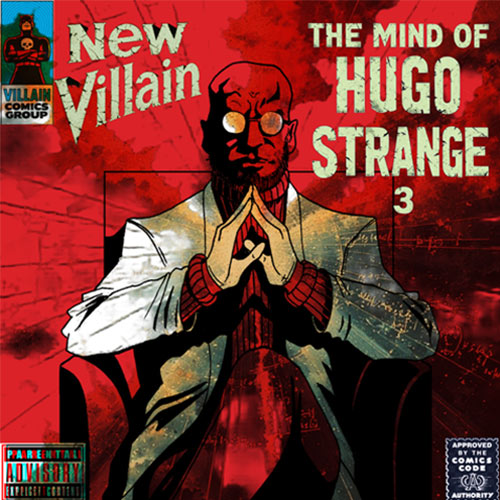
Some albums are collections of songs. Others feel like worlds you enter. “The Mind Of Hugo Strange 3” from New Villain belongs in the second category.
Across 12 records, New Villain builds a dark, psychologically layered universe that pulls inspiration from comic mythology, underground Hip-Hop grit, dystopian imagery, and internal conflict. The project does not chase trends, algorithm tricks, or microwave moments. Instead, it leans heavily into atmosphere, storytelling, mood, and identity. That decision immediately separates the album from much of today’s disposable release culture.
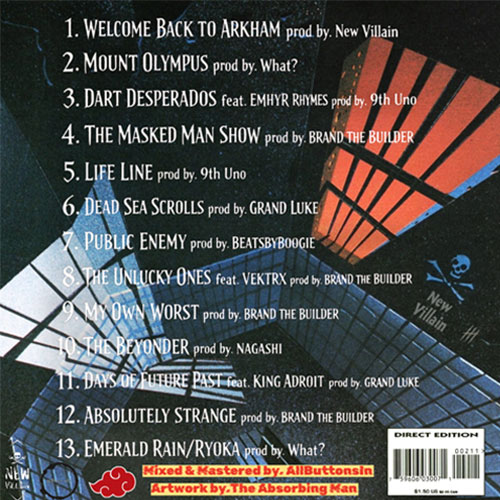
From the opening moments of “Welcome Back To Arkham,” the listener is dragged into a cinematic landscape built on tension and paranoia. The production feels cold and deliberate while New Villain approaches the microphone with the confidence of someone fully aware of the world he is creating. There is no easing into the album. The project begins with intensity and maintains that energy throughout its runtime.
The sequencing matters here. This is not an album designed to be shuffled.
Tracks bleed together emotionally, even when the production styles shift between producers. That cohesion is one of the album’s biggest strengths. Despite having contributions from BeatsByBoogie, 9th Uno, Brand The Builder, Grand Luke, Nagashi, and New Villain himself, the project never feels scattered. Every beat selection serves the larger vision.
The production across The Mind Of Hugo Strange 3 deserves serious recognition.
9th Uno delivers some of the project’s most immersive moments. “Mount Olympus””” feels massive without losing its underground soul, balancing cinematic energy with grimy textures. On “Dart Desperados,” the beat creates a tense backdrop that allows both New Villain and Emhyr Rhymes to attack the record with sharp precision.
Brand The Builder leaves fingerprints all over the emotional core of the album. “The Masked Man Show” and “My Own Worst” stand out because of their ability to feel haunting without becoming overproduced. There is restraint in the instrumentation that gives New Villain room to speak directly to the listener rather than compete with the beat.
Grand Luke’s production on “Dead Sea Scrolls” and “Days Of Future Past” adds another layer to the album’s identity. The drums hit with authority while the samples create a sense of movement and tension. “Days Of Future Past” especially benefits from this approach as King Androit enters the picture and elevates the track’s intensity.
Nagashi’s contribution on “The Beyonder” feels appropriately cosmic and unsettling. The production stretches outward, creating one of the album’s most cinematic moments. It sounds like the soundtrack to psychological warfare.
Listen to Spit Fire Radio: www.spitfireradio.com
Then there is BeatsByBoogie’s “Public Enemy,” which injects raw aggression into the middle of the project. The track feels confrontational and unapologetic, adding momentum at the perfect point in the album.
What separates New Villain from many underground artists is commitment.
A lot of artists use comic book imagery as aesthetics. New Villain treats it like world-building.
Throughout “The Mind Of Hugo Strange 3,” the bars feel tied to a larger mythology. The references never come across as forced fan service. Instead, they become extensions of identity, trauma, ambition, isolation, and survival. The “villain” persona functions as both armor and confession.
That duality gives the album depth.
On records like “Life Line” and “My Own Worst,” the writing becomes more personal beneath the dark imagery. There are moments where the bravado cracks just enough for the listener to see the human side beneath the character. Those moments are important because they keep the album from becoming one-dimensional.
Meanwhile, tracks like “Absolutely Strange” close the album with a feeling of transformation rather than resolution. The ending does not attempt to tie everything neatly together. It leaves tension in the air, which ultimately fits the project’s psychological tone.
The guest appearances are used strategically instead of excessively.
Vektrx brings a strong presence to “The Unlucky Ones,” helping create one of the album’s grittiest moments. The chemistry feels natural rather than assembled for streaming numbers.
Emhyr Rhymes complements New Villain particularly well on “Dart Desperados.” Both artists attack the beat with urgency, making the track one of the project’s standout cuts. King Androit adds energy and balance to “Days Of Future Past,” helping the track feel larger without taking away from the album’s identity.
Importantly, none of the features overshadow the main artist. They strengthen the universe instead of distracting from it. A major issue with modern Hip-Hop is that too many projects reveal everything on first listen.
The Mind Of Hugo Strange 3 works differently.
The production details, layered writing, thematic callbacks, and mood shifts reward repeat listens. This is the kind of album underground Hip-Hop fans revisit late at night with headphones on. The atmosphere matters just as much as the lyrics.
That replay value is becoming rare. Rather than chasing viral records, New Villain focuses on creating an immersive body of work. In today’s climate, that alone deserves recognition. The Mind Of Hugo Strange 3 is a dark, immersive, and sharply constructed underground Hip-Hop album that succeeds because it fully commits to its vision.
New Villain does not water down his identity to reach broader audiences. He leans deeper into it. That authenticity gives the project weight. Combined with strong production choices, focused sequencing, and meaningful collaborations, the album stands as one of the more cohesive underground releases in recent memory.
For fans of cinematic Boom Bap, psychological storytelling, and concept-driven underground Hip-Hop, this project deserves serious attention.
New Villain did not just release another album. He built a universe.