


Encyclopædia Britannica
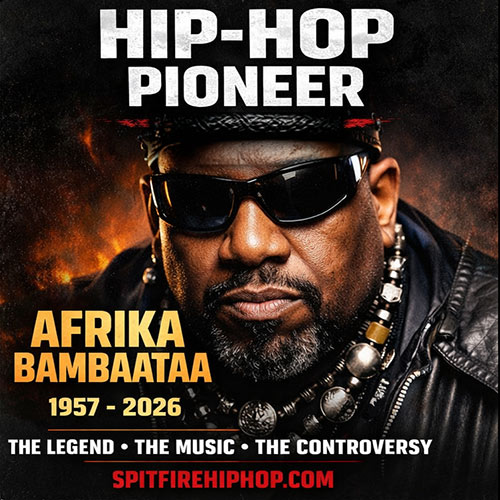
Afrika Bambaataa, born Lance Taylor, has died, closing the life of one of the most influential and most contested figures hip-hop has ever produced. Reports published on April 9, 2026, say the South Bronx pioneer died in Pennsylvania from cancer-related causes, ending a chapter that stretches from the earliest block-party days of the culture to decades of global influence, and then into years of painful reckoning.
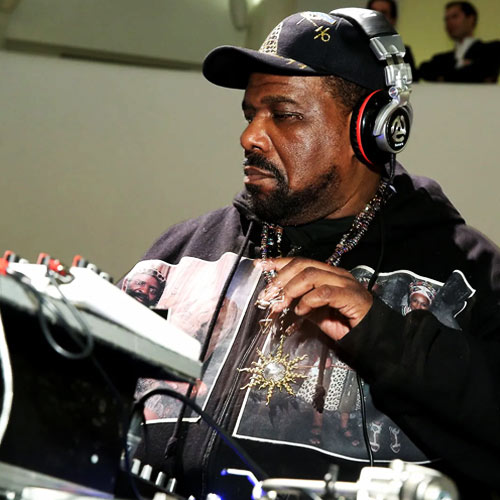
To talk about Afrika Bambaataa is to talk about the architecture of hip-hop itself. Long before rap became a global commercial force, before playlists and DSPs and billion-stream success stories, Bambaataa was one of the figures helping define what the culture could be. Alongside DJ Kool Herc and Grandmaster Flash, he has long been described as one of hip-hop’s “godfathers,” not just because he played records in the beginning, but because he helped shape the philosophy, sound, and reach of the culture while it was still being invented. Britannica describes him as a leading disseminator of hip-hop culture and a pioneer of breakbeat deejaying, while AP’s obituary places him among the main founders whose impact on the genre was “profound and unmistakable.”
His story began in the Bronx River Houses in the South Bronx, where the social wreckage of disinvestment, segregation, and violence formed the backdrop for a new culture’s birth. According to Britannica, Taylor was raised by family connected to Black liberation politics and was introduced early to music through his mother’s large record collection. That wide musical diet mattered. It helped make him the kind of DJ whose sets were less about staying inside one groove and more about moving restlessly across funk, disco, electronic music, and break-heavy records in ways that felt radical at the time. AP similarly notes that his ability to repurpose and mix older records became a hallmark of the parties he began throwing in neighborhood spaces as a teenager.
Before he became a global hip-hop name, he was also a neighborhood figure shaped by the Black Spades. Britannica says he rose within the gang as a teenager before redirecting that leadership energy into something else: the Universal Zulu Nation, founded in the early 1970s as an alternative youth organization rooted in Afrocentrism, self-improvement, and community service. That transformation remains central to how supporters long understood Bambaataa’s role. He was not just spinning records. He was trying to turn the energy of the block away from territorial destruction and toward music, style, dance, identity, and organization.
That organizational vision helped make Bambaataa bigger than a local DJ. The Universal Zulu Nation became one of the earliest frameworks for hip-hop as a movement rather than merely a sound. AP notes that he later emphasized inclusion by presenting the organization as open to “all people from the planet earth.” In practical terms, that meant helping define hip-hop not only through deejaying, but through its interlocking elements: rapping, graffiti, B-boying, and DJ culture. Britannica credits Bambaataa and others in the mid-1970s with identifying those pillars and helping crystallize what hip-hop was becoming.
Musically, his biggest commercial and historical breakthrough was 1982’s “Planet Rock,” recorded with Soulsonic Force. That record did more than become a hit. It changed the available future of Black music. Britannica notes that the song fused elements from Kraftwerk’s “Trans-Europe Express” and “Numbers” with the Roland TR-808 drum machine and electro-funk energy, while AP calls it one of his breakthrough tracks. In the years since, “Planet Rock” has been treated not simply as an important single, but as a pivot point: a record that helped connect hip-hop to electronic music, club culture, and a machine-driven futurism that would echo for decades through electro, Miami bass, techno, freestyle, and beyond.
Listen to Spit Fire Radio: www.spitfireradio.com
That is why Bambaataa’s reach extends far beyond old-school rap nostalgia. “Planet Rock” did not just sound new in 1982. It gave permission for hip-hop to be sonically adventurous. It suggested that the culture could sample Europe, reroute funk, embrace technology, and still remain deeply rooted in Black urban invention. Britannica notes that “Planet Rock” peaked at No. 4 on Billboard’s R&B chart and inspired a wave of similar electro-funk records. Later releases, including “Looking for the Perfect Beat,” “Unity” with James Brown, and “World Destruction” with John Lydon showed how wide Bambaataa’s musical imagination could range.
His influence also traveled institutionally. Britannica says Cornell University acquired his archive in 2013, including more than 30,000 recordings, marking his historical significance in formal preservation terms. That matters because hip-hop pioneers often built world-changing culture without the same archival respect long granted to rock, jazz, or classical figures. The fact that a university collection sought Bambaataa’s materials shows how deeply his work had entered the documented history of American music.
And yet any full accounting of Afrika Bambaataa’s life now has to confront the part of the story that permanently altered his public standing. Beginning in 2016, multiple men accused him of sexually abusing them when they were minors. Bambaataa denied wrongdoing. But the allegations led to his removal or expulsion from leadership in the Universal Zulu Nation, depending on the outlet, and later civil litigation followed. Pitchfork, Entertainment Weekly, and Britannica all note that in 2025, a plaintiff received a default judgment in a civil case after Bambaataa failed to respond in court. Those facts do not erase his role in building hip-hop, but they do fundamentally change how that role must be discussed.
That tension is unavoidable now. For one generation, Bambaataa was the visionary who helped transform street energy into global culture. For another, and for many within the same generation, his later years became inseparable from allegations of predation and institutional silence. The contradiction is not something a responsible obituary can smooth over. It has to sit in the center of the conversation. His life leaves behind both a blueprint and a wound: a blueprint for how hip-hop organized itself into a culture with values, aesthetics, and international reach, and a wound tied to the allegations that shattered the moral authority he once claimed.
Still, when the history of hip-hop’s formation is told, Afrika Bambaataa will remain in the frame because the frame itself was partly built by him. The neighborhood party as cultural laboratory, the DJ as historian and futurist, the idea that music, dance, and visual style could become a unified youth movement, the leap from breakbeats to electro futurism, the very notion that hip-hop could be both local and planetary — all of that bears his imprint. Britannica’s description of him as a leading disseminator of hip-hop culture is precise because it captures more than celebrity. He spread a language. He spread a method. He helped invent a way for young people, especially in the Bronx, to turn abandonment into authorship.
His death, then, does not produce a simple legacy. It produces a divided one. Afrika Bambaataa helped lay the foundation for modern hip-hop and for the broader sonic universe that grew around it. He also leaves behind allegations and legal findings that force any honest remembrance to reject hero worship. If hip-hop has always demanded truth-telling, then the truth here is layered: he was foundational, influential, and historically important; he was also the subject of grave accusations that permanently altered how many people understand his place in the culture. Both realities belong in the record.
In the end, Afrika Bambaataa’s life mirrors something larger about hip-hop history itself: brilliance born from neglect, innovation forged in community, mythology built in real time, and the painful necessity of revisiting that mythology when new truths emerge. The music will remain. The influence will remain. The argument over what to do with that influence now remains too. And maybe that is the final measure of how large his presence was: even in death, the culture cannot discuss its own origin story without also wrestling with the man who helped write it.