




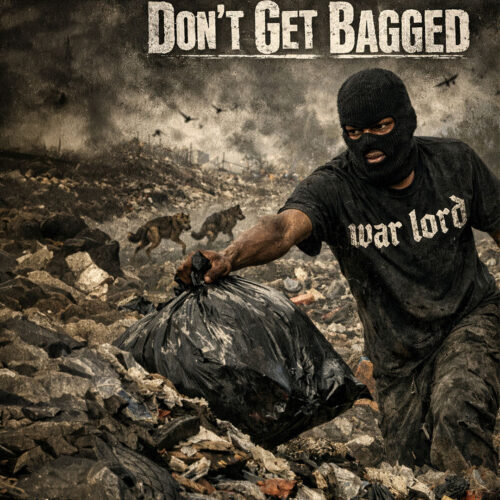
Some records arrive like entertainment. Others arrive like a warning. “Don’t Get Bagged” from Piff Penny, Juice Gawwd, and Ray Swoope, produced by HUD, clearly aims for the second lane. Even before the first bar is considered, the single’s title and visual presentation tell you exactly what kind of atmosphere this record wants to create.
That is part of what makes the record immediately effective. In underground Hip-Hop, presentation still matters. The strongest songs often begin building their world before the listener even presses play, and “Don’t Get Bagged” understands that. The title is blunt. The cover art is chaotic and hostile. Together, they frame the single as something closer to a survival statement than a casual drop. That kind of commitment to tone is important, especially in a crowded rap landscape where too many records sound interchangeable before the first verse is even over.
The chemistry behind a three-artist collaboration like this also gives the record added weight. When multiple voices are involved, the risk is that the song can feel stitched together rather than fully formed. But with a concept this sharp, the collaboration has a built-in advantage. Everybody involved can attack the same central energy from a different angle. That is where records like this gain replay value. It is not just about who had the best verse. It is about whether the artists make the world of the song feel believable. “Don’t Get Bagged” has the kind of title and framing that demands conviction, not just technique.
A large reason this record stands out is the sense of pressure surrounding it. The song title does not leave much room for vague interpretation. It suggests consequence, danger, and the need to move smart. In rap, that kind of language can easily become performative if the record does not carry enough presence to support it. Here, though, the concept is strong enough that the track feels designed to hold tension from start to finish. It reads like a record made for listeners who want rap to feel immediate again, not overly filtered for trend-chasing algorithms.
Listen to Spit Fire Radio: www.spitfireradio.com
That same urgency is what gives the single its share-worthy quality. Records that travel in Hip-Hop are usually the ones that create an instant reaction, and “Don’t Get Bagged” has a phrase built for that. It sounds like something listeners can quote, caption, repeat, and turn into conversation. That matters more than ever in today’s rap climate. A strong hook or memorable title is no longer just part of the song. It becomes part of the culture around the release. When a record gives people language they can use, it naturally increases the chances of the song cutting through the noise.
Production matters heavily on records like this, and HUD’s role is central to the record’s impact. The beat doesn’t just sit behind the artists — it reinforces the tension that the title suggests. There’s a weight to the production that makes the record feel immediate and unforgiving, which is exactly what a track like “Don’t Get Bagged” requires. HUD understands that atmosphere is everything here, and the production acts as the backbone of the entire record.
What also helps this single is that it does not appear to be chasing softness or crossover polish. There is a lane for that in Hip-Hop, but not every record should want it. Some songs are supposed to sound like concrete, smoke, bad news, and survival instinct. That is where “Don’t Get Bagged” appears most comfortable. It feels like a record that knows its audience and is not interested in compromising its identity just to widen the net. That self-awareness often separates songs with staying power from songs built only for temporary attention.
For SpitFireHipHop readers, this is the kind of record that fits squarely into the value of underground rap coverage. Songs like “Don’t Get Bagged” remind listeners that Hip-Hop still has room for records that are unafraid to sound harsh, pointed, and rooted in tension. Not every memorable release needs a glossy rollout or a pop-friendly angle. Sometimes the most effective records are the ones that walk in with a hard title, a threatening visual, and enough conviction to make both feel earned.
In the end, “Don’t Get Bagged” succeeds because it understands the power of tone. Piff Penny, Juice Gawwd, and Ray Swoope do not appear interested in making a record that simply passes through a playlist unnoticed. This single aims to plant a flag. It wants to feel dangerous, memorable, and uncompromising. For listeners who still want rap music that sounds like a warning shot instead of background noise, this release brings exactly that kind of energy.
“Don’t Get Bagged” lands with the type of grim street-rap identity that underground Hip-Hop still thrives on. Between the strong concept, the collaboration angle, and HUD’s production support, the single carries real presence. It is a record that knows the mood it wants and does not back away from it.




Outstanding write up. Shessshhhh 🫡🙏🏼🎈🎈🎈🎈🎈🎈🎈🎈
Pingback: Piff Penny Revisits His Childhood on “Kid in Compton” Produced by Get’em Rizzy – SpitFireHipHop.com