

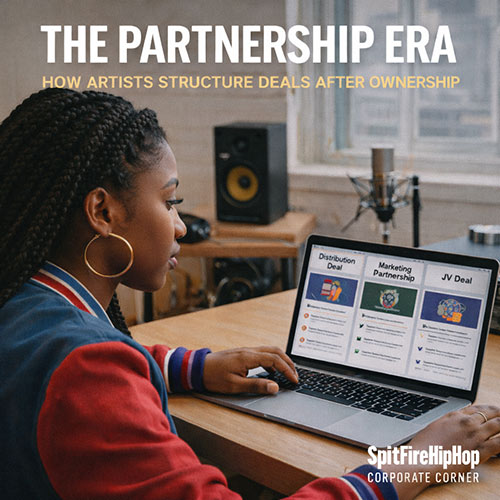
The old model told artists to sign away control to scale. The new model starts with ownership—and uses partnerships to multiply it. In 2025, the smartest artists don’t chase exits. They design deals that expand reach without surrendering power.
Why the Industry Has Entered the Partnership Era
Ownership flipped the power dynamic. Once artists control catalogs, fan access, and revenue, they no longer need one monolithic deal to move forward. Instead, they assemble targeted partnerships that solve specific problems—marketing, distribution, touring, brand amplification—without touching the core asset.
This shift mirrors how modern companies scale: modular growth, not total buyouts. Artists who understand this stop asking, “Who will sign me?” and start asking, “What lever do I want to pull next?”
What “After Ownership” Actually Means
After ownership doesn’t mean anti-label. It means non-dependent. The artist’s business functions independently before any partnership begins. Revenue flows. Fans are reachable. The catalog works. Momentum is sustainable.
From that position, deals are optional—and optional deals are the best deals.
The New Deal Types Artists Use in 2025
Instead of one all-encompassing contract, artists now mix partnerships across functions:
- Distribution partnerships for scale without master loss
- Marketing partnerships for campaign amplification
- JV deals for shared upside on specific projects
- Brand partnerships aligned with identity, not desperation
- Touring partnerships that underwrite risk without ownership grabs
Each deal is scoped, timed, and purpose-built.
Why Small, Focused Deals Beat One Big One
Big deals feel efficient but concentrate risk. When one partner controls everything, artists lose flexibility. Focused partnerships allow artists to stack leverage while keeping exit options open.
Multiple small deals:
- reduce dependency
- preserve ownership
- allow renegotiation as leverage grows
- keep timelines flexible
- protect long-term value
This is how artists scale without giving up the company.
How Leverage Changes Deal Structure
Leverage doesn’t just improve terms—it changes what’s negotiable. Artists with ownership can dictate:
- shorter contract lengths
- higher profit splits
- retained IP
- transparent reporting
- performance-based incentives
Listen live: Spit Fire Radio → https://www.myksfr.com
When walking away is real, partners compete on value—not pressure.
What Artists Should Never Give Up Again
Some assets should remain non-negotiable once ownership is established.
Those include:
- masters and publishing
- fan data and communication channels
- brand identity and creative control
- release schedules
- long-term catalog participation
Partnerships should plug into these assets, not extract them.
Why Labels Are Adapting (Quietly)
Labels know the power has shifted. That’s why many now offer distro-first deals, catalog partnerships, or campaign-based agreements. They’re responding to artists who arrive with leverage and systems already built.
The artists who get the best partnerships aren’t rebellious—they’re prepared.
How Artists Choose the Right Partner
In the partnership era, alignment matters more than size. The right partner accelerates what already works. The wrong one introduces friction.
Smart artists evaluate:
- incentive alignment
- scope clarity
- exit terms
- reporting transparency
- respect for ownership
If a partner can’t explain how they add value without taking control, they’re not a partner—they’re a buyer.
The Corporate Corner Reality
Companies don’t sell the company to grow the company. They partner, license, and collaborate—while protecting core assets. Artists who think like companies build careers that last longer than any single deal.
The Real Takeaway
The future isn’t anti-deal.
It’s post-dependency.
Artists don’t win by rejecting partnerships. They win by choosing them—from a position of ownership.
That’s the partnership era.