




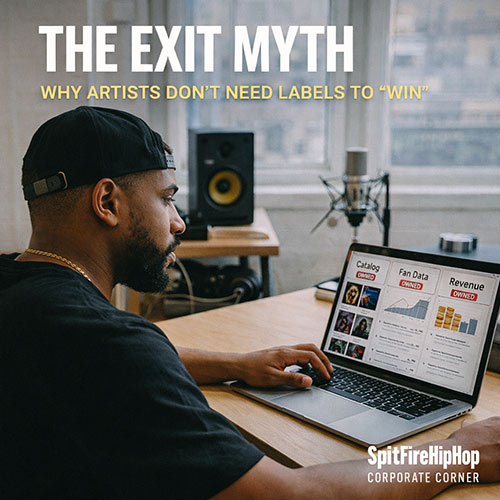
For decades, artists were taught that success meant one thing: getting signed. In 2025, that belief is outdated—and often dangerous. The exit myth convinces artists that labels are the finish line, when in reality, independence has quietly become the winning position.
Where the Exit Myth Came From
The exit myth was born in an era when labels controlled everything—distribution, marketing, radio, manufacturing, and access. Signing wasn’t optional; it was survival. Artists needed labels to exist at scale.
That world no longer exists.
Streaming, direct-to-fan tools, social platforms, and owned distribution have collapsed the old gatekeeping model. Yet the psychology remains. Many artists still view a label deal as validation instead of asking what the deal actually provides.
The myth survives because it’s emotional, not logical.
Why “Getting Signed” Is Framed as Winning
Labels represent certainty. They promise resources, exposure, and relief from financial pressure. For artists grinding independently, that promise feels like escape.
But escape is not strategy.
Winning isn’t about leaving independence behind; it’s about removing dependency. Labels solve problems quickly, but often at the cost of long-term control.
What Labels Actually Do in 2025
Modern labels no longer build artists from scratch. They optimize momentum that already exists.
Today, labels primarily offer:
- capital injection
- marketing amplification
- playlist and platform access
- operational support
What they rarely offer is ownership—or patience.
Artists who expect labels to “make them” are already behind.
Why Independent Artists Are Quietly Winning
Independent artists who build systems don’t chase exits. They build options.
When an artist owns:
- their catalog
- their fan data
- their release schedule
- their revenue stack
they’re already winning—whether or not a label ever enters the picture.
Independence flips the power dynamic. Deals become partnerships instead of lifelines.
The Real Definition of Winning
Winning is not exposure.
Winning is not validation.
Winning is not a logo next to your name.
Winning is:
- predictable income
- ownership of assets
- creative control
- leverage in negotiations
- the ability to say no
Artists who reach this point don’t need permission to move.
Why Labels Respect Independent Artists More
Ironically, labels offer better terms to artists who don’t need them.
Why?
Because independent artists:
- reduce label risk
- already have systems in place
- don’t require heavy development
- can walk away
Labels compete for leverage—not talent.
The Trap of “We’ll Help You Grow”
Growth promises are intentionally vague. Without clear definitions, “growth” often means more output, more pressure, and more dependency—with little ownership gained.
Artists must ask:
- What do I give up?
- What do I keep?
- What do I control?
- What happens if this fails?
If those answers aren’t clear, the exit is an illusion.
Why Many Artists Regret Chasing the Exit
Artists who rush toward deals often discover too late that:
- income is still unpredictable
- creative control is reduced
- ownership is diluted
- leverage disappears
The exit myth collapses when artists realize they didn’t escape the grind—they just changed bosses.The Corporate Corner Reality
Companies don’t sell controlling interest just to “win.” They scale internally first, then choose partnerships that multiply value without surrendering control.
Artists must adopt the same mindset.
The Real Takeaway
Labels aren’t the enemy—but they aren’t the destination either.
Artists don’t win by exiting independence.
They win by building power before partnerships.
The moment you stop needing a label is the moment labels start needing you.




Pingback: The Partnership Era: How Artists Structure Deals After Ownership – SpitFireHipHop.com